
Six days of snowboarding: what carbohydrates really do to your body | PRACTICAL TEST
Published: 13 March 2026
Last updated: 13 March 2026
Reading time: 5-6 minutes
Categories By Sport
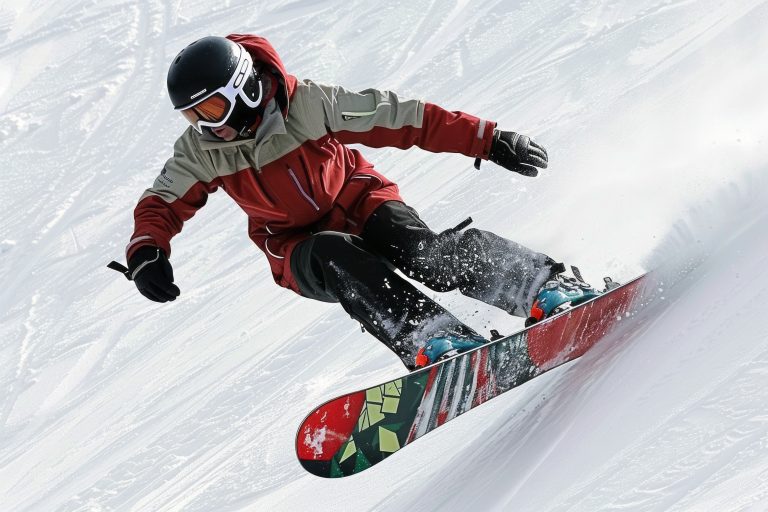
The winter sports season is in full swing and still has a while to go. A great time to share my own winter sports experience from this year. Last week, I was on the slopes early every morning. Six days in a row snowboarding on the glacier in Kaprun, Austria. An average of 4.5 hours a day on the board. I'm not a top snowboarder, just an average recreational rider who enjoys the mountain. My sports nutrition has been well organised for my regular training sessions for years, and I know from personal experience that it works. However, I hadn't done a more extensive practical test for a while. This week was the moment for that.
So I consciously split the six days into two blocks: a few days without carbohydrate supplementation while riding, a few days with. And I consciously skipped lunch, also as part of the test. The results confirmed what I already knew, but made it very concrete again.
The test: with and without carbohydrates
I divided the six days roughly into two blocks:
- Days without a top-up: only water on the slopes, no snacks in between, skipping lunch.
- Days with supplementation: an energy bar with 32 grams of carbohydrates every hour, lunch skipped.
Both approaches started with the same breakfast. The only difference was what went into my body in between, or didn't.
I consciously skipped lunch, and I was aware that this isn't the most optimal choice. For periods of active exertion lasting 4 to 5 hours, your body benefits from replenishment, including in between. But I consciously chose to do this, for two reasons.
Firstly, I wanted to test the effect of the energy bar as purely as possible. A packed lunch in between would have clouded that picture.
Secondly, piste meals are generally fatty and rich in slow-digesting carbohydrates. Precisely the type of food that doesn't work well during or just before exertion. Fat and slow carbohydrates are released too slowly to serve directly as fuel during the afternoon. Moreover, digestion draws blood to your stomach and intestines, which temporarily detracts from your muscles. A typical piste lunch would therefore probably not have prevented the afternoon slump, but would have caused the heavy feeling immediately afterwards. A light meal with quickly available carbohydrates, such as a banana or a low-fat sandwich, would have contributed positively. But that is simply not what the average mountain hut serves.
What I noticed on the days without
The morning went well. For the first few hours, I felt perfectly fine: energetic enough to simply enjoy the slopes. But after midday, it started: my legs got heavier, my reactions slower, and my concentration faded. I started to ski more cautiously, choosing easier pistes. And I fell more often. Not due to an unfortunate line, but because muscle control simply diminished. You don't notice it until it's already gone.
What I noticed on the days with supplementation
A bar with 32 grams of carbohydrates every hour. That's not a lot, but it's enough to keep the engine running. On these days, I still had the energy and enjoyment to continue all afternoon. No heavy legs, no loss of concentration, no unnecessary crashes. The difference compared to days without them was clearly noticeable.
Why this works
Snowboarding is a sport where you constantly alternate between periods of intense exertion (steep slopes, turns, unexpected obstacles) and moments of relative rest (ski lift, walking to the piste). Due to this variation, carbohydrates are the primary fuel for your muscles, not fat.
Your body stores carbohydrates as fuel reserves in your muscles and liver. These reserves are limited. With continuous high exertion, such as running or cycling at pace, these reserves can be largely depleted after just 90 minutes. But snowboarding is not a continuous effort. Due to its varied nature, with lifts, waiting, and rest periods between runs, your body also burns a larger proportion of fat as fuel in between, which conserves carbohydrate reserves. With recreational riding, you can extend that limit to 2 to 3 hours or longer. The fact that I only felt the dip after lunch, after about 2 to 3 hours on the slopes, fits perfectly with this.
On average, I burned 1,500 to 1,600 kilocalories per day purely from snowboarding itself. This excludes the calories burned from walking, taking lifts and other daily activities. If you include that, you quickly reach 3,000 kcal or more for a full day in the mountains. That's a serious energy demand that starts early in the morning. The carbohydrates you consume in between are therefore not a luxury but pure function. 32 grams per hour doesn't compensate for everything but it prevents the dip.
The silent danger: fluid loss in the cold and at altitude
On the slopes, you don't often think about thirst. It's cold, you sweat less noticeably than on a summer run, and you're too busy focusing on the mountain ahead. But at altitude and in cold conditions, you lose more moisture than you realise, and you barely notice it.
I consciously drank half a litre of water every hour, even though I didn't always feel thirsty immediately.
Why you lose more fluid at altitude
At 2,000 metres or higher, the air is significantly drier than at sea level. Your lungs have to humidify this dry air with every breath before your body can process it. During physical exertion, you breathe faster and deeper, and with that, you lose more moisture through respiration than you would expect. It is invisible and constantly present. At high altitudes, people can lose up to 1.5 litres of extra fluid per day through respiration, on top of their normal sweat rate.
Why the cold suppresses your thirst
In the cold, your body actively suppresses the feeling of thirst. Your blood vessels constrict to retain heat, making your body internally think it has enough fluid. The result: you drink less, while your body actually loses more fluid. Furthermore, you urinate more often in the cold, as your body tries to regulate its fluid balance. A double loss, then: less thirst and more loss at the same time.
Even if you lose just 21–30% of your body weight in fluid, the effects start to become noticeable: increased fatigue, reduced concentration and slower reactions. By the time you feel thirsty on the mountain, it’s often already too late. Especially in the cold.
Practical: how much to drink on the slopes?
- 500 ml of water per hour is a good starting point. Precisely what I did myself. In the cold and strong wind or during heavy exertion, this can increase to 750 ml.
- Check your urine: light yellow is good. Dark yellow or orange means you haven't drunk enough.
- Start the day off well hydrated: drink at least 500 ml with breakfast.
- Alcohol in the evening doesn't count towards fluid replacement. It actually has a dehydrating effect.
I used a regular 500ml water bottle in my small backpack. Every ski lift was a chance to drink. It became second nature.
The basics: a good breakfast
A hearty breakfast is the foundation. Especially in the mountains, where your body demands energy from the moment you wake up. My breakfast was familiar and practical: three brown rolls with toppings, a bowl of fruit yogurt with muesli and extra dried fruit, and an egg. No complicated sports supplement, just solid food.
The brown rolls provide slow-release carbohydrates, the muesli and dried fruit a quick replenishment of fuel reserves, the fruit yoghurt supplies protein, and the egg provides a nourishing base for the rest of the morning. Add two large cups of coffee, and that’s not just habit. Caffeine can positively influence alertness, reaction time, and endurance, and works best when taken well before exercise. So breakfast was the perfect moment. I also drank at least 500 ml of water with breakfast. At altitude, you already start the day slightly dehydrated.
Eat your breakfast 60-90 minutes before you go out for your first run. Your body needs time to make the energy available. Going straight onto the board with a full stomach is counterproductive.
Recovery starts in the evening
After a day of driving, you're depleted. Your fuel reserves have been tapped, your muscles are fatigued, and your body is ready to recover if you give it the right materials. With an active expenditure of 1,500 kcal plus your normal daily burn, you'll need a substantial meal in the evening.
In the evening, I often ate pasta or another ’rich“ meal: carbohydrates to replenish stores, protein for muscle recovery, vegetables for vitamins and minerals. Simple, but effective.
- Carbohydrates: pasta, rice, potatoes, bread. Have a generous portion. You will need it the next day.
- Proteins: pulses, eggs, dairy, tofu or (for non-vegetarians) meat or fish. Aim for 25–40 grams of protein at your evening meal.
- Vegetables for vitamins and minerals. They help your body to recover after a day of strenuous exertion.
- Sufficient fluids: an additional 0.5–1 litre. Beer and wine do not count towards this.
Don't eat too late. Your body recovers best when your meal has been processed in time before you go to sleep. Try to eat no later than 2 hours before bedtime.
Winter sports also means après-ski
Winter sports are, of course, more than just the slopes. Après-ski is part of it: good company, a drink, discussing the day and partying. I have consciously kept that very limited this week, which means the effect of alcohol is not a factor in this test. Alcohol slows down recovery, disrupts your sleep and has a dehydrating effect. Three things you'd rather not have when you want to be back on the board the next morning.
This doesn't mean you can't drink alcohol on a skiing holiday. That's perfectly understandable and for many people, it's just part of the holiday. But be aware that it will affect how you feel the next day. Benefit from this test: it was conducted under the purest possible conditions, making the results all the more reliable.
Conclusion: the theory is correct! Even for the casual piste-goer
I'm not a top athlete. I'm a recreational snowboarder who is also a sports nutrition coach. I've already got my sports nutrition well sorted for my daily training, and I've previously tested it on myself with demonstrable results. But I hadn't done a more extensive, multi-day test with conscious variations for a while. And it's good to do that every now and then. Not just to know, but also to feel it.
The result was clear. The days with carbohydrate replenishment felt better: more energy throughout the afternoon, less of a feeling that the tank was running on empty, fewer unnecessary falls. Conscious hydration prevented headaches and fatigue that I'd sometimes experienced on previous ski trips.
Burning 1,500 kcal actively per day. Half a litre of water every hour. 32 grams of carbohydrates every hour. A substantial breakfast. Adequate recovery in the evening. This isn't a complicated protocol. It's simply looking after yourself, even on holiday.
Would you like to know how to optimise your sports nutrition for your activities? At TWINDO Sports Nutrition, I guide athletes of all levels, from recreational enthusiasts to dedicated amateurs. Feel free to Contact Sign up for my free masterclass.
Sign up for the free Masterclass: Sports Nutrition Basics. Click here. here.
Get more out of every workout
Discuss your situation during a personal initial consultation.