
Sports nutrition for minigolfers: every choice counts, even in a precision sport
Published: 1 May 2026
Last updated: 1 May 2026
Reading time: 6-8 minutes
Categories By Sport
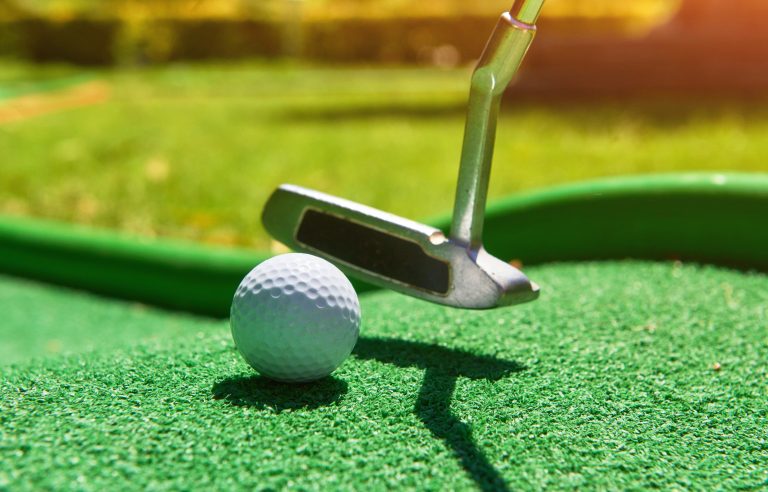
Mini-golf and sports nutrition. Not the most obvious combination, one might say. And yet: when I recently gave a presentation on location at DUNO for club members and trainers from various clubs affiliated with the Dutch Minigolf Association, that was exactly the subject.
Minigolf is more serious than many people think. The sport is played at the highest level by passionate athletes who do everything they can to perform. It is played both nationally and internationally: from Dutch championships to European and World Championships. Anyone who experiences the sport up close will quickly see that it is not just a holiday pastime.
What also quickly became clear to me as I got to know the sport was that sports nutrition was a fairly unknown area for many mini-golfers. Not because they weren't open to it, quite the opposite, but the subject had simply received little attention within the sport. And that's precisely what makes it so enjoyable to dedicate a blog to it. Because the basics of good sports nutrition are relevant for every athlete, including the mini-golfer who trains seriously and competes week in, week out.
And what a morning it was. I hadn't expected such attentive listening, such incisive questions, or that there would already be talk of a follow-up afterwards. But that is precisely what happened.
That morning confirmed something I've known for a while: sports nutrition isn't just for marathon runners, cyclists, or elite athletes. It's relevant for any athlete who wants to perform seriously. And in a precision sport like mini-golf, where small mistakes have big consequences, that's perhaps even clearer than anywhere else.
What does minigolf ask of an athlete?
Minigolf is a sport of precision. That may sound accessible, but anyone who experiences the sport up close will quickly see that there is much more to it than hitting a ball into a hole.
Tournaments are long. Concentration and focus are required all the time. You don't have time for an energy dip halfway through. And in multi-day competitions, recovery suddenly plays a big role: everyone starts day two relatively fresh, but the athlete who recovered well on day one starts slightly sharper.
Those are precisely the factors where nutrition makes a direct difference.
The basics come first: don't turn the pyramid upside down
One of the core messages of my presentation was simple: start with the basics. That sounds logical, but in practice I see it go wrong regularly. Athletes reach for supplements while their daily nutrition is far from in order.
The sports nutrition pyramid works from the bottom up. The foundation is daily basic nutrition: sufficient energy, the right macronutrients, regular meals. Above that comes sport-specific nutrition: the timing around training sessions and competitions. And only at the very top, when everything else is in order, do supplements come into play. Anyone who reverses this order is building on shaky foundations.
Energy balance: everyone is different
Sports nutrition doesn't start on match day. It starts with your daily energy requirement. This is different for everyone and is determined by several factors: your basal metabolism, your daily activity outside of sport, your work, and the intensity of your training sessions and matches.
For minigolfers, this concretely means: know what your body needs on a normal day, and consciously adjust your nutrition with this in mind on match days. Don't eat less because it's ’just minigolf’, but consciously pay more attention to what your body needs to stay sharp.
The three macronutrients each play their own role. Carbohydrates are the primary fuel for the brain and muscles: the right intake at the right time is crucial for how sharp you stay during a long round. Proteins are essential for recovery and muscle maintenance: during multi-day tournaments, protein intake on rest days is at least as important as on match days themselves. And fats support long-term energy management and play a role in anti-inflammation and recovery.
Concentration and focus: where nutrition truly makes a difference
In minigolf, concentration is everything. One moment of mental lapse, one energy dip at the wrong time, and you miss a putt you'd normally always make. This is precisely where nutrition plays a direct role.
The key, and as far as I'm concerned, the central theme Of all the sports nutrition considerations for minigolfers, maintaining a stable blood sugar level is key. But why is this so essential in this particular sport? Because minigolf is mentally demanding from start to finish, without the physical distractions you have in other sports. Your brain continuously uses glucose. For every assessment of the course, every choice in approach, every stroke that requires precision. If your blood sugar drops, so does your concentration. You become more restless, less patient, less accurate. In a sport where millimetres can make all the difference, that's disastrous.
You won't achieve a stable blood sugar level with one large meal, but with regularity: don't go too long without eating, no major sugar spike just before a round, but regular small meals that keep your energy levels even. Practially: have a good breakfast on match day, small snacks in between, don't wait until you're hungry.
Hydration is also an underestimated factor. Even mild dehydration (1–2% of your body weight) has a measurable impact on cognitive function. A practical tip I gave: weigh yourself before and after exercising. That way, you can see how much fluid you lose and how effectively you’re replenishing it. The aim: to keep fluid loss to a minimum. And no, you don’t need expensive sports drinks for that. Taking small sips of water regularly is often more than enough.
Supplements: caffeine and omega-3 as the most relevant options
My message regarding supplements was clear: most products are expensive, and their effect often falls short in practice. Especially if the foundation isn't in place, supplementation is of little use.
For mini-golfers, two supplements are most relevant.
Caffeine is the most researched performance-enhancing supplement and has also proven effective in precision and concentration sports. It helps you stay sharper and more alert, without the energy crash you see with quick sugars. However, there are a few important caveats. Its effect is personal: not everyone reacts the same way. Therefore, always test it first during training sessions or less important matches, never for the first time on a big day. In terms of timing, caffeine works best about 45 to 60 minutes before performance. And for those who already drink several cups of coffee a day: pay attention to your total daily intake and don't add extra caffeine without thinking.
Omega-3 fatty acids are not direct performance enhancers, but support recovery in the long term and have a positive effect on cognitive functions, including concentration. For minigolfers playing longer tournament periods, this is a worthwhile supplement if omega-3 intake through diet is insufficient.
The match day: practical and concrete
On the day of the competition itself, the principles aren't complicated, but they are too often ignored. Eat breakfast on time: not immediately before the start, but 2 to 3 hours beforehand, so your stomach is settled. Start the day well-hydrated and maintain that level with regular small sips. In between, keep your energy levels up with small snacks: a piece of banana, a handful of nuts, a wholemeal cracker. No large meals. After the competition, don't delay recovery: replenishing proteins and carbohydrates as quickly as possible makes a noticeable difference. And sleep is perhaps the most underestimated recovery tool of all. A good night's sleep before a competition day is worth more than any supplement.
And the most important overarching message: consistency is more important than perfection. A sports nutrition plan that you stick to 90% of the time works better than a perfect plan that you give up on after three days.
Multi-day tournaments: recovery determines the outcome
In multi-day tournaments, everyone essentially starts day one on an equal footing. But thereafter, the differences begin to emerge. The athlete who has eaten well the previous evening, adequately replenished their fluids, and had a good night's sleep, starts day two just a little bit sharper. After three or four days, those small differences can add up to a significant advantage.
Recovery nutrition therefore gains extra value in multi-day competitions: start replenishing immediately after each round, don't wait until hunger sets in.
Sports nutrition is for every athlete
The morning at DUNO has reaffirmed why I do this job. It's not about the sport, it's about the athlete! Whether you're an elite marathon runner, a recreational cyclist, or enjoy playing minigolf every week, if you're serious about your sport, you deserve serious sports nutrition advice.
Good sports nutrition isn't about extremes. It's about a strong foundation, smart choices and consistency. Especially in a sport like mini golf, where small differences can have big consequences, that can be the very thing that makes the difference.
Many of the topics covered in this blog, from carbohydrates and proteins to caffeine, omega-3, hydration, recovery nutrition, and sleep, have been elaborated on extensively in separate blog posts. Would you like to learn more about a specific topic? Read on at my TWINDO Sports Nutrition Blog.
Would you like to know more about sports nutrition for your sport?
Be my guest Contact inscription for the Free Masterclass Sports Nutrition Basics from TWINDO Sports Nutrition Advice: every quarter, online, for every recreational or amateur athlete. Sign up: twindo-sportvoedingsadvies.nl/free-masterclass-sports-nutrition-basics/#register
Get more out of every workout
Discuss your situation during a personal initial consultation.