
What does the fight between Verhoeven and Usyk teach us about sports nutrition for boxers?
Published: 29 May 2026
Last updated: 29 May 2026
Reading time: 4-5 minutes
Categories By Sport
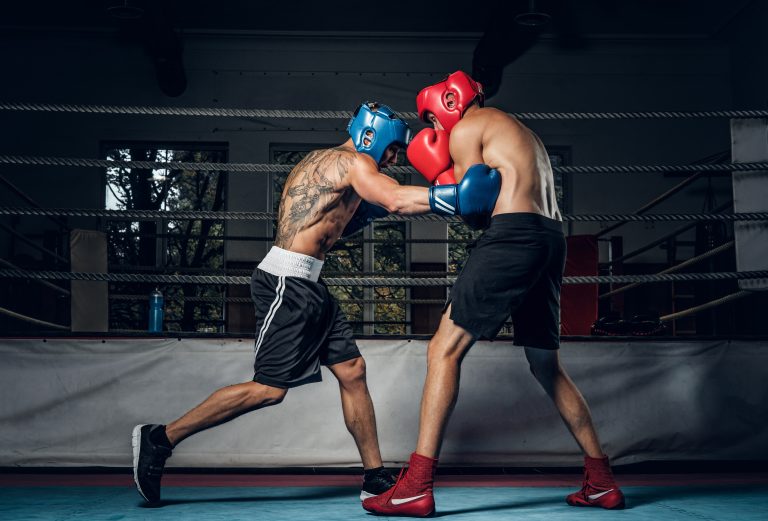
Last Saturday, at the pyramids of Giza in Egypt, one of this year's most talked-about boxing matches took place: Rico Verhoeven against Oleksandr Usyk. I followed the reactions afterwards with interest. Verhoeven dominated for 11 rounds and was leading on points, until the referee stopped the fight in the closing seconds of the 11th round. Whether that was justified is still up for debate: team Verhoeven made an official protest and the referee is said to have since admitted he made a mistake. Whatever the outcome: what Verhoeven showed that night was downright impressive.
As a sports nutrition coach specialising in martial arts, I immediately thought: how do they do this? How do you keep this up at this level? The answer is never one thing. It's talent, yes. It's mental strength. But just as important is training: years of specific build-up of endurance, muscle capacity and recovery speed. And it all hinges on the right nutrition.
What can we, recreational and amateur boxers, learn from it? That's what I try to explain in this blog. Because the principles applied by top athletes like Verhoeven and Usyk are largely relevant at your level too.
As a sports nutrition coach, I regularly work with BJJ practitioners, but also coach athletes from other martial arts. Among other things, I coached a kickboxer, and that opened my eyes to something I haven't forgotten since: a boxer or kickboxer has fundamentally different nutritional needs than a BJJ practitioner or judoka. Not a little different, the starting point already differs. And that's in how intensely and continuously the body consumes energy during boxing itself.
The difference that defines everything
In BJJ and judo, there are relative moments of rest during sparring: in a guard, a clinch, a grip battle. The intensity then drops slightly. There is hardly any real fat burning there, as the heart rate remains simply too high during intense sparring for that. But your body gets just enough breathing space to partially recover. This ensures that carbohydrate stores are drawn down slightly less quickly than in boxing.
In boxing, that breathing space just isn't there. As soon as the signal sounds, you are in motion. Footwork, jabs, defence, combinations: for three minutes, with no real break. The heart rate remains constantly high and your body burns carbohydrates at a high and continuous pace. That produces lactic acid, and you feel it in your arms, your legs and your lungs. As a result, boxing depletes your carbohydrate stores faster than ground combat sports: more per training minute. That's the crux of the difference, and it's also why a boxer's nutritional needs look fundamentally different.
Carbohydrates, proteins and fats: different ratios than you think
In BJJ and judo, I advise athletes to eat an average of 4 to 5 grams of carbohydrates per kilogram of body weight on intense training days. With boxing, this is higher: 5 to 7 grams per kilogram. Not as a luxury, but because in boxing your body burns carbohydrates continuously and without interruption and those stores are structurally depleted faster.
This difference is also reflected in the timing. Two to three hours before training, have a hearty meal with complex carbohydrates: rice, pasta, sweet potato. This applies to all martial artists. But whereas I advise BJJ practitioners against eating anything during training because of stomach problems and because it adds little physiologically, in boxing it's a different story. In training sessions of an hour and a half or more with several hard rounds, refuelling halfway makes sense. An isotonic drink or a small amount of fast-absorbable carbohydrates will keep supplies up and prevent you from just surviving the final rounds instead of boxing. During competitions, this is practically not feasible. The break between rounds lasts only a minute. What boxers drink then is water or a small sip of sports drink, mainly for fluids and minerals, not as a carbohydrate source.
Then protein. The general guideline for strength athletes of 1.6 to 2 grams per kilogram per day also applies to boxers, but I rather recommend the upper end of that range for intensively boxing athletes. The reason is specific to boxing: taking punches causes muscle damage in a way that hardly matters in BJJ and judo. Shoulders, arms, torso: those muscles not only work hard, they also have to process blows. That requires more recovery capacity, and proteins are the building blocks for that.
Fats are not unimportant for boxers. They are essential for hormone balance and anti-inflammation, especially with a vegetarian diet like my own. But as a direct source of energy during training, they hardly count in boxing. The intensity is structurally too high for that. This is also true for BJJ and judo in essence, but because the intensity peaks there alternate a bit more, it plays an even more pronounced role in boxing.
Sweating under gloves and headgear
This is an aspect that boxers often underestimate and which I rarely need to point out so explicitly with judokas or BJJ practitioners: moisture loss in boxing is huge. Gloves and head protection create an enclosed environment. You sweat intensely, but the heat has little dissipation. This makes hydration and mineral replenishment more urgent for boxers than for most other combat athletes.
Sodium, potassium and magnesium are lost during intensive sweating. A deficiency manifests itself not only in muscle cramps. It also affects your reaction speed, concentration and technique. Exactly the things that make the difference in boxing. I advise boxers to start hydrating before training and during longer sessions to supplement not only water but also minerals, via a sports drink or electrolyte tablets.
Beta-alanine and creatine: not the same story as BJJ and judo
With my BJJ practitioners and judokas, I recommend creatine because of the explosive movements and short intensive spikes. Creatine is at least as useful for boxers, and perhaps even more directly applicable. Every combination, every swerve, every counter requires rapid power development. In kickboxing, the same applies to the leg muscles: a hard kick is an explosive movement where creatine can make an immediate difference.
On top of this comes the combination with beta-alanine, which is particularly relevant in these sports. Beta-alanine helps buffer lactic acid in the muscle. And in boxing and kickboxing, with their high and constant load and the lactic acid produced in the process, that buffering effect is tangible. Less burning sensation in the arms or legs in the last minute of a round. Slightly more time before fatigue wins out over technique.
The tingling skin you may experience at first with beta-alanine is harmless but can take getting used to. Spread the dosage over the day, then it is manageable.
As a vegetarian athlete myself, I have experience with the effect of creatine. Meat and fish eaters tend to have higher basal values in muscle, so the effect of supplementation for vegetarians is greater on average. This is as true for a vegetarian boxer as it is for me on the tatami.
Weight classes: boxers do things differently
Both boxers and BJJ and judo practitioners have weight classes, but the way they are handled differs. In the top sport of boxing, there are aggressive waste practices that I do not recommend and do not supervise. But even at recreational and amateur level, I see boxers doing things that I don't encounter as much with judo or BJJ practitioners: restricting water the day before a weigh-in, or drastically cutting down in the week before a competition.
What I do recommend is a strategy that starts with the basics: train the entire run-up to a competition in the right weight class, at a body weight realistic for that class. This requires a long-term approach: gradually reducing fat percentage without losing muscle mass. No crash, no dehydration, but built-up conditioning.
Do you notice that your nutrition does not match what your sport actually demands? Or are you a boxer who wants to work on a concrete nutrition plan tailored to your training schedule and goals? Feel free to Contact on. I will be happy to help you.
Get more out of every workout
Discuss your situation during a personal initial consultation.