
Bulking and cutting explained for bodybuilding, fitness, and martial arts
Published: 30 December 2025
Last updated: 30 December 2025
Reading time: 6-7 minutes
Categories By Sport
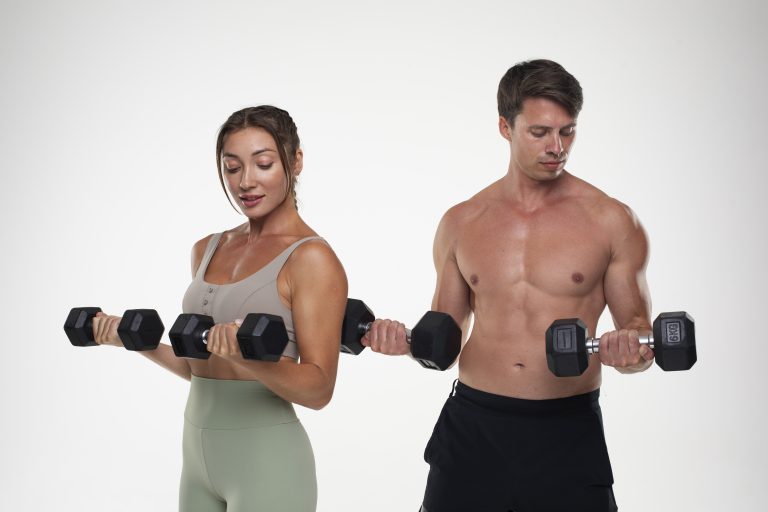
In the world of bodybuilding, fitness and combat sports, you hear the terms ‘bulking’ and ‘cutting’ everywhere. This nutritional strategy, originally developed for competitive bodybuilders, is also widely used in combat sports such as BJJ, judo, MMA and boxing. Both for achieving a specific weight class and for optimising strength and appearance. Increasingly, recreational athletes in these disciplines are using this approach to work towards a muscular and defined body. But what does this strategic nutritional approach entail exactly, and perhaps more importantly: is it for you?
Why bulk and cut?
Many athletes in bodybuilding, fitness, and martial arts grapple with a fundamental dilemma: on the one hand, they want to build muscle mass to become stronger and look more muscular, while on the other hand, they want to lose fat to make their muscles more visible or to achieve a specific weight class. The problem is that these two goals get in each other's way. To build muscle, you need extra energy, which means you have to eat more than you burn. To lose fat, you need to eat less than you burn. Making these two processes happen simultaneously is extremely difficult for most athletes with some training background.
The solution? Divide your year into different phases. During a bulking phase, you focus entirely on building muscle mass by consciously eating more than you consume, combined with intensive strength training. Yes, you will also gain some fat, but you temporarily accept that. You then switch to a cutting phase where you eat less to lose that extra fat, while retaining the muscle you've built by eating enough protein and continuing with strength training. For combat athletes, this can also be strategically used to build muscle mass between competitions and then slim down again to the desired weight class.
A recent study from 2024 (https://pubmed.ncbi.nlm.nih.gov/40219022/showed that this phased approach works: participants not only improved their body composition but also their health markers such as blood inflammatory substances. This emphasises that the strategy, when applied correctly, can be effective and safe for recreational athletes.
What does science say about the right approach?
The biggest pitfall when bulking is thinking that you have to eat as much as possible. Doesn't eating more mean more muscle growth? Unfortunately, the human body doesn't work like that. Research on well-trained athletes (https://pmc.ncbi.nlm.nih.gov/articles/PMC6680710/Research shows that a modest surplus of 200-300 calories per day is much more effective than larger surpluses of 500 calories or more. With that small surplus, you build just as much muscle mass but gain much less fat.
This is nicely illustrated by recent research from 2024https://www.menshealth.com/uk/nutrition/a60936373/bulking/) in which athletes were divided into groups with different calorie surpluses. The group that ate 15% more than they burned did not build any more muscle than the group that ate just 5% more, but did gain significantly more fat. The message is clear: moderation pays off.
The same applies to cutting. Eating too little might seem like the quickest way to visible abs, but in reality, you'll also lose valuable muscle mass. Research from 2024 (https://greatist.com/fitness/bulking-vs-cuttingconfirm that a gradual weight loss of approximately half to one percent of your body weight per week is the ideal speed. This way, you retain most of your carefully built-up muscles.
How do you apply this in practice?
The main starting point is calculating your personal energy requirement. This is not a fixed number that is the same for everyone. A man weighing 75 kg who trains three to four times a week needs an average of between 2400 and 2600 calories on rest days. For women weighing 65 kg, this is around 2000 to 2200 calories. But note: on training and match days, this requirement is 200 to 500 calories higher, depending on how intensely you train. Therefore, it is useful to calculate your average energy requirement over an entire week: add up all the days and divide by seven. This weekly average forms the basis for your bulking or cutting phase.
During a bulking phase, you will add 200 to 300 calories per day to this weekly average. When doing so, opt for nutrient-rich foods such as whole grains, lean protein sources, nuts, avocado, and healthy oils. Spread your meals evenly throughout the day for a constant supply of energy and building blocks to your muscles. Pay particular attention to your protein intake: between 1.6 and 2.2 grams per kilogram of body weight per day is scientifically proven to be effective for muscle building. For a man weighing 75 kilograms, this means around 120 to 165 grams of protein spread throughout the day. Your carbohydrates will be adjusted to your training intensity, with recreational athletes who train intensively 3-4 times a week generally doing well with approximately 5 to 7 grams per kilogram of body weight.
During a cutting phase, you deduct 300 to 500 calories from your weekly average. The clever part is that you can eat slightly more on intensive training or competition days than on rest days, as your energy needs are higher then.
Now comes the important point about protein during a cut: you increase your protein intake to 2.0 to 2.4 grams per kilogram of body weight. Why higher than during bulking? Not because more protein automatically provides better muscle protection. Above 2.0 grams per kilogram, it adds little. But extra protein during a cutting phase has two other benefits: it keeps you feeling fuller for longer (important if you're hungry due to eating less) and your body burns more calories digesting protein than carbohydrates or fats. Do you go higher than 2.4 grams per kilogram? Then you really don't gain any extra benefit. The excess protein is simply burned for energy or converted, not stored as fat as is sometimes thought.
You reduce your carbohydrates, with the exact amount depending on your training intensity. Those who continue to train intensively during the cutting phase can maintain about 4 to 6 grams per kilogram to sustain performance, while athletes with a lighter training schedule often do well with 3 to 5 grams per kilogram. Plan your carbohydrates mainly around your training sessions for optimal performance.
During a cut, focus on voluminous foods that fill you up without containing many calories. Think about large quantities of vegetables, lean meat, fish, and low-fat dairy. This helps to manage hunger, which is perhaps the biggest challenge during a cutting phase.
When is it time to change?
For men, it is advisable to start bulking when your body fat percentage is between 11 and 18 percent. For women, this range is below 24 percent. Switch to cutting when men are above 15 to 18 percent and women are above 24 to 27 percent. These percentages are not arbitrarily chosen but are based on how the body reacts to insulin and hormones. At higher fat percentages, it becomes increasingly less efficient to continue bulking.
Important considerations and alternatives
Although bulking and cutting strategies can be effective, caution is advised. A large-scale Canadian study from 2021 (https://pmc.ncbi.nlm.nih.gov/articles/PMC9462603/) among almost 3,000 young people showed that these cycles can be associated with an unhealthy relationship with food and a disturbed body image in some individuals. This underscores the importance of a healthy mental approach.
For many recreational athletes, a more moderate approach can be more effective and healthier. Instead of extreme bulking and cutting, you can also consistently eat around your maintenance calories, with small adjustments of 200 calories more or less based on your current goals. This flexible approach is psychologically much less taxing and often more sustainable in the long run.
It's essential to realise that all the figures mentioned are averages. Your personal energy requirement is influenced by numerous factors: your body composition, how often and intensely you train, whether you do physical work or mainly sit at a desk, your age, gender, genetics, and even how much stress you experience and how well you sleep.
As a sports nutrition coach, I help recreational athletes calculate their personal calorie and macronutrient requirements. Together, we create a nutrition plan that aligns with your training schedule, goals, and lifestyle. We look not only at the numbers but also at what is achievable and sustainable for you. Because the best plan on paper won't work if it doesn't fit your daily reality. By closely monitoring your progress and making adjustments where necessary, we ensure that you work towards your goals in a healthy and effective way.
The core of the message
Bulking and cutting can be valuable strategies if you have specific body composition goals. The key to success lies in moderation and patience. Small calorie surpluses during bulking and modest deficits during cutting, combined with sufficient protein and consistent strength training, yield the best results without unnecessary health risks.
Start with the basics: consistent training, mindful eating with sufficient protein, and gradually learning about nutrition. Only when you have these fundamentals in place can you consider whether a strategic bulk-and-cut approach suits you. And don't forget: individual tailoring is essential for success.
Would you like to get started with a personal nutrition plan that perfectly suits your goals and lifestyle? Then schedule a free introductory meeting via my website and discover how I can help you achieve your fitness goals in a healthy and sustainable way.
Get more out of every workout
Discuss your situation during a personal initial consultation.