
HMB supplement: it promises more muscle mass and faster recovery, but does it really work?
Published: 30 January 2026
Last updated: 30 January 2026
Reading time: 7-9 minutes
Categories Supplements
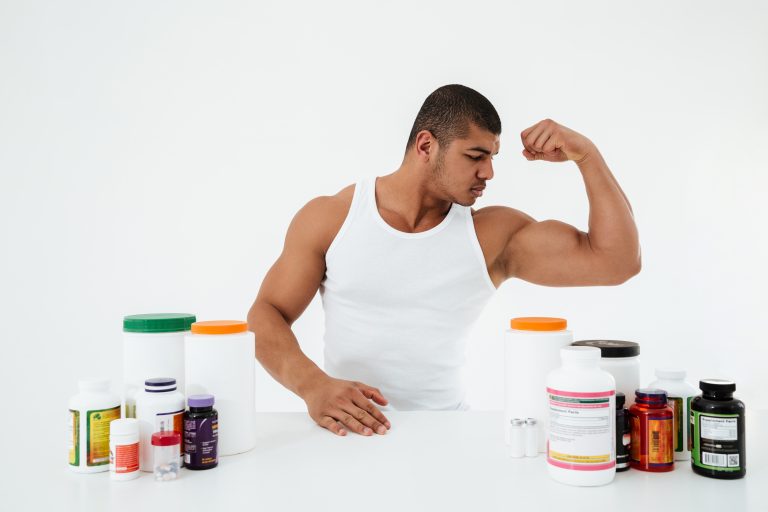
You've probably seen them in the sports shop: jars with the letters HMB Usually between creatine and protein powders, with promises of muscle building and faster recovery. Sounds good, doesn't it?
More and more athletes are using it. But if you ask a few questions, it turns out that many people don't actually know what it is or how it works. They've read somewhere that it helps, or a gym buddy recommended it. And before you know it, you've got another tub of supplements on your shelf.
But does it make sense for you as a recreational or amateur athlete? Or is it another supplement that's mainly good for the sports shop's turnover?
HMB is often presented as a sort of miracle cure that prevents muscle breakdown and speeds up recovery. As with many supplements, the reality is somewhat more nuanced. In this blog, I'll delve into what HMB actually is, what it does in your body, and perhaps most importantly, what scientific research *really* says about it.
What exactly is HMB?
HMB stands for beta-hydroxy-beta-methylbutyrate. Fortunately, we just use the abbreviation, otherwise conversations about sports nutrition would get very long.
Your body makes it itself from leucine, an amino acid found in protein-rich foods such as meat, dairy products and pulses. Of all the leucine you consume, only a small proportion is converted into HMB: around 5%. That isn’t much, but that small amount does appear to play a role in protecting and repairing your muscles after training.
And therein lies the crux. Because your body produces so little of it, the idea has arisen that extra HMB via a supplement might offer benefits. Particularly in situations where your muscles are extra stressed, such as during intensive training or when you are losing weight.
In what forms is HMB available?
In the sports shop or online, you'll find HMB in two variations: calcium-HMB (HMB-Ca) of HMB free acid (HMB-FA). Both are well absorbed by your body, so for most recreational athletes, the choice between the two makes little difference.
These can be bought in different forms:
Capsules or tablets the most common form, easy to dose and carry.
Powder suitable if you want to mix HMB into your shake or smoothie. It usually tastes a bit bitter, so pure HMB powder isn't pleasant for everyone. Mercifully, there are also flavoured varieties.
Pre-workout mixes Some pre-workout supplements contain HMB as part of a mix with other ingredients such as caffeine and creatine. This can be convenient, but you have less control over the exact dosage of HMB.
Most people opt for capsules because of their convenience and because you don't have to deal with an unpleasant taste.
What does HMB do in your body?
Interest in HMB primarily revolves around two effects that are relevant to athletes.
First, it seems to inhibit muscle breakdown. During strenuous training, a calorie deficit, or prolonged inactivity, such as an injury that prevents you from exercising for a few weeks, your body can break down not only fat but also muscle mass for energy. You'd naturally prefer to avoid this. HMB appears to be able to partially inhibit this process, helping you to preserve your muscle mass more effectively.
Secondly, it supports the Recovery after training. After a tough workout, your muscles are damaged and need to recover. That recovery process is crucial. It's actually the moment at which you get stronger. HMB appears to support this process, allowing your muscles to come back faster and possibly stronger.
In short: HMB would help you to lose less muscle mass and support recovery. Of course, that sounds great on paper. But as you now know with supplements: between “sounds good in theory” and “works in practice” there can sometimes be a world of difference.
What does scientific research say?
This is where it gets interesting. Because HMB is not a new or obscure supplement with hardly any research behind it. Research has been conducted on it since the 90s, and by now there is hundreds of studies appeared. Over the past few years, the quality of research has also improved considerably, with larger groups of participants and better research designs.
In 2024 and 2025, several large review studies have been published. These are studies that analyse all existing research together to reach a reliable conclusion. For example, an important study from 2025 analysed 11 previous reviews with a total of 41 different datasets.https://pmc.ncbi.nlm.nih.gov/articles/PMC11724150/This gives a good picture: HMB has been extensively researched.
And what do you know? The short answer is: Yes, HMB works, but not equally well for everyone..
If you with strength training If you start exercising more intensively, there's a good chance you'll benefit from it. In this group, researchers often see clear improvements in muscle mass and strength. Of course, this also has to do with the fact that beginners make much faster progress anyway. Your body still reacts very well to new stimuli. HMB seems to reinforce that process.
Also at Older athletes HMB appears to work well. As we get older, muscle breakdown increases and it becomes harder to maintain muscle mass. Recent research from 2024 in people with sarcopenia, which is severe muscle loss in the elderly, shows that HMB particularly muscle strength can be improvedhttps://www.frontiersin.org/journals/medicine/articles/10.3389/fmed.2024.1348212/full). So for this group, it can really make a difference.
But here's the nuance: for athletes who training for years and have their nutrition well in order, the results are much more varied. Some studies find small improvements, others see no effect at all. And that's actually logical. If you've been training consistently for years and eating well, you've already picked a lot of the “low-hanging fruit”. HMB might then offer a few extra percent, but no dramatic changes.
What does emerge fairly consistently in research is that HMB can help with faster recovery English less muscle damage After strenuous training. This makes it interesting during periods when your body is under extra strain. Think of an intensive training period or when you train much more often per week than usual.
Is HMB for you?
To summarise the research, HMB appears to be mainly useful in specific situations. It's not a supplement that everyone should take as standard, but it can certainly have its place.
Are you Beginner NET If you've just started strength training or exercising more intensely, you're more likely to benefit than if you've been training for years.
Are you losing weight And do you want to preserve as much muscle mass as possible during a calorie deficit? Then HMB can help to inhibit muscle breakdown.
Are you Over 50 And do you notice that muscle maintenance is becoming increasingly difficult? HMB can then offer support in counteracting muscle loss.
Recovering from an injury or a period where you couldn't exercise? In those situations, muscle breakdown is a real risk, and HMB seems to be particularly valuable here.
Train you intensive With multiple heavy training sessions per week? Then HMB can support the recovery process.
But if you are an experienced strength athlete who has been training consistently for years, eats enough protein and recovers well? Then HMB is probably not a gamechanger for you. It might offer a small advantage, but don't expect huge differences. And let's be honest: your money would often be better spent on the basics or on supplements whose effects are better proven in advanced athletes, such as creatine.
How much HMB should you use and for how long?
If you decide to try HMB, the most commonly used and researched dosage is 3 grams per day. You divide this over three moments of 1 gram. For example, at breakfast, around your training, and at dinner.
Many people take HMB around their training, thinking it works best for recovery then. But honestly, it seems the most important thing is just getting your total daily amount in. Whether you do that precisely around your training or spread throughout the day probably makes little difference.
And then there's patience. Because as you probably know by now with supplements: they don't work immediately. The effects build up gradually. Expect at least two to four weeks before you notice anything, but preferably eight to twelve weeks for an optimal effect. Research from 2024 shows that longer interventions yield significantly better results than short periods. So don't expect to be much stronger or leaner after just a week.
For most amateur athletes cyclic use the most logical. Use HMB during specific periods when you really need it: during a diet phase of 8-12 weeks, during a heavy training period, or during recovery from an injury. After that, you can stop and only restart when you enter such an intensive period again. That is also kinder to your wallet, as HMB is not the cheapest supplement.
Continuous use can be particularly beneficial for over-50 athletes who systematically experience muscle loss. Studies show that long-term use (up to a year) is safe and that the effects persist as long as you continue to use it.
And what happens if you stop? Good question. The benefits don't disappear immediately, so your muscles won't suddenly get smaller. However, the extra protective effect against muscle breakdown will gradually decrease. Fortunately, you're not “addicted” to HMB. You can simply stop taking it without a major relapse.
Combining HMB with other supplements
HMB is often combined with Creatine, and that actually makes perfect sense. Creatine primarily improves your strength and explosiveness. It allows you to lift a bit heavier in the gym or get that one extra rep. HMB, on the other hand, focuses more on muscle preservation and recovery. So, they do different things and can complement each other without getting in each other's way.
But here's an important point: HMB only works well if you Sufficient protein And actually, that makes sense. You can't expect a supplement to support muscle growth if your body isn't getting enough building blocks to work with.
For athletes, around 1.6 to 2.2 grams of protein per kilogram of body weight per day is a good guideline.https://bjsm.bmj.com/content/52/6/376Do you weigh 75 kilos? Then you need 120 to 165 grams of protein per day. Without that foundation, HMB has little purpose. It's a bit like buying an expensive sports car but running it on cheap fuel. Its full potential won't be realised.
Is HMB safe?
Good news: HMB has been extensively researched and found to be safe. Dosages of up to 6 grams per day have been investigated without serious side effects, even with long-term use of up to a year. HMB does not affect your hormones and is not on the doping list, so it is legal for all athletes. This includes those who participate in competitions.
Most people experience no side effects. Mild stomach or intestinal complaints sometimes occur, particularly at higher doses, but this is not very common. And if you do experience them, you can simply stop; there is no permanent damage or unpleasant after-effects.
In short: if you decide to try HMB, you don't have to worry about safety, at least. It is one of the better researched supplements in this area.
Is HMB worth the investment?
And so we come to the question that it's all about in the end: should you buy it or not?
HMB can be useful if you've just started training, are losing weight, are struggling with recovery, or are over 50. In these situations, you're most likely to actually benefit from it.
But if you've been training intensively for years, and your nutrition, sleep, and recovery are all in good order, then the effect is likely to be small. Your money is then often better spent on the basics. Or on supplements such as creatine, which are more effective for most athletes and, moreover, a lot cheaper.
It's important to have realistic expectations. HMB is not a miracle cure. You won't simply become much stronger or leaner from it. It might deliver a few percent extra results, but only if the fundamentals are in place: a good training plan, sufficient protein (1.6-2.2 grams per kilogram of body weight), the right amount of calories for your goal, and adequate sleep and rest.
If the foundation isn't solid yet, then it's smarter to invest in that first before thinking about supplements. Because, as I often say: supplements are an addition to a good foundation, not a replacement for it.
My advice
Don't see HMB as a must-have, but as a situational supplement. It can help in specific phases of your sporting life, but it will never replace a good training schedule, sufficient protein, enough calories, and good sleep. If that foundation isn't solid yet? Then it's wiser to invest in that first. Is everything okay and are you looking for that little bit extra during a tough period? Then you can consider HMB. With realistic expectations, of course. Scientific literature from recent decades, with strong analyses from 2024 and 2025, supports precisely this nuanced view. HMB works, but not for everyone. And certainly not as a miracle cure.
Would you like to learn more about sports nutrition? Sign up for my free monthly Masterclass Sports Nutrition Basics. In this online session, you will learn which fundamentals are truly important before you spend money on supplements. Perfect for recreational and amateur athletes who want results without unnecessary supplements.
Need personal advice? Take Contact Meet me op. I'll gladly help you complete the puzzle: no nonsense, but with what really works for you.
Get more out of every workout
Discuss your situation during a personal initial consultation.