
Why ordinary food often works better than supplements
Published: 13 August 2025
Last updated: 2 September 2025
Reading time: 6-7 minutes
Categories General
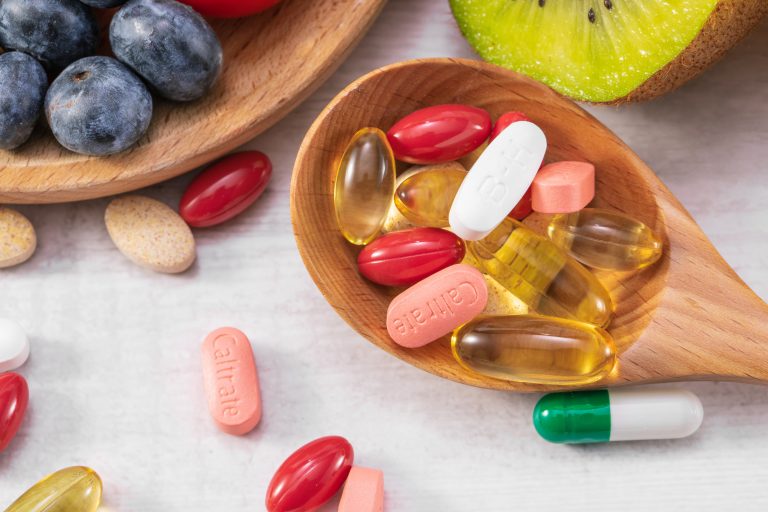
I regularly meet people who enthusiastically tell me about their extensive supplement regimes, while at the same time admitting that they regularly skip meals and often eat fast food. It's a paradox I encounter more and more often.
People invest in the latest pre-workout formula, but forget to eat their greens. They dutifully take their BCAAs, but regularly skip meals. It seems as though they expect supplements to resolve their fundamental nutritional deficiencies, which unfortunately doesn't work like that.
Why supplements are not the solution for recreational athletes
The supplement industry is a master at creating urgency. “Without this product, you’ll never reach peak performance!” “Professional athletes swear by it!” What they often fail to mention: these professional athletes have a whole team around them, a perfect nutritional routine, and train full-time.
For recreational athletes who exercise three times a week, the impact of supplements is minimal. Research by the International Society of Sports Nutrition consistently shows that basic nutrition accounts for 80–90% of your sporting performance (https://jissn.biomedcentral.com/articles/10.1186/s12970-017-0189-4). At best, supplements can optimise the last 5–10%. But only if the basics are already perfectly in order.
The problem is that most people don't have the basics in order. They're looking for a quick fix instead of structural improvement. That's understandable, but not effective. Recent research from 2024 confirms that a holistic approach to nutrition is more important than isolated supplements for athletes (https://pmc.ncbi.nlm.nih.gov/articles/PMC10892519/).
Furthermore, many recreational athletes underestimate their actual calorie intake. Research shows that people underestimate their calorie intake by an average of 20–40%, whilst overestimating their activity levels. This means that they often think they need supplements, when in fact they are simply not eating enough.
The sports nutrition pyramid: first the foundation, then the extras
In my practice, I always work according to the sports nutrition pyramid. This pyramid starts at the base: sufficient calories, a good balance between carbohydrates, proteins and fats, and all essential vitamins and minerals from regular food.
The foundation consists of three pillars: energy balance, macronutrients and micronutrients. When it comes to energy balance, you need to consume enough calories to sustain your training sessions and aid recovery. For recreational athletes, this often means 300–500 extra calories on training days. When it comes to macronutrients, the distribution is crucial: approximately 45–65% carbohydrates, 15–25% protein and 20–35% healthy fats. You can get your micronutrients by eating a varied diet with plenty of vegetables, fruit, wholemeal products and lean protein sources.
At level two, we look at sports-specific nutrition. These are often surprisingly simple things: a banana for a running workout, chocolate milk after strength training, or some dates during a long bike ride. For longer endurance sports (over 90 minutes), energy gels and sports drinks also fall into this category. A recent systematic review from 2024 in carbohydrate science showed that carbohydrate intake during prolonged exercise (>90 minutes) can significantly improve performance.https://www.mdpi.com/2072-6643/16/21/3731).
Supplements are right at the top of the pyramid as a final addition, not as a foundation. Yet many athletes do the opposite: they start with supplements and hope they compensate for a poor base.
An important aspect that is often overlooked is the timing of food intake. The body requires different nutrients at different times. Pre-workout nutrition should mainly consist of carbohydrates for quick energy, while post-workout nutrition needs a combination of carbohydrates and protein for optimal recovery. The International Society of Sports Nutrition confirms in their 2017 scientific position stand that the timing of protein intake can be just as important as the total amount for muscle building and recovery (https://pmc.ncbi.nlm.nih.gov/articles/PMC5477153/).
Advantages of natural sports nutrition over supplements
Regular food has several significant advantages over supplements. Firstly, you know exactly what's in it. An apple contains not only carbohydrates, but also fibre, vitamins, minerals and antioxidants, all of which work together. A sports drink mainly contains sugar and artificial additives.
In addition, your body recognises natural food better. It is evolutionarily programmed to absorb and utilise nutrients from real food. Isolated substances in supplements are often absorbed less effectively. This is because nutrients in natural food work together: the fibre in an apple, for example, aids the gradual absorption of sugars, while vitamin C promotes iron absorption from spinach. This natural cooperation between different components in whole foods is lacking in isolated supplements.
From a financial perspective too, natural nutrition is usually more beneficial. A €40 tub of creatine might last two months. For the same amount of money, you can buy quality food for weeks that not only supports your athletic performance, but your overall health.
Natural foods also contain bioactive compounds not found in supplements. For instance, raw cacao contains not only magnesium but also flavonoids that can improve blood circulation. Cherries naturally contain melatonin, which can support sleep and recovery. These synergistic effects cannot be obtained from isolated supplements.
An interesting point is also the psychological component. People who consciously make healthy dietary choices often feel mentally stronger and more motivated. This placebo effect can influence performance more than many a supplement.
Practical Implementation: From Theory to Practice
Start small and practically. Plan your meals a week in advance and always have healthy snacks with you. A handful of nuts, a piece of fruit, or a hard-boiled egg are perfect sports snacks.
For optimal sports nutrition, regularity is crucial. Do not skip meals and ensure stable blood sugar levels by eating something every 3-4 hours. This alone will provide more consistent energy during training. Then focus on timing: carbohydrates 1-2 hours before intense training sessions provide energy, while protein within 30 minutes after training sessions optimally supports recovery.
Experiment with natural energy sources around your workouts. Try a banana with honey instead of an energy gel for shorter workouts, or chocolate milk instead of a recovery shake. For longer endurance sports, energy gels and sports drinks remain the practical choice due to their rapid absorption and ease of digestion during exertion.
Don’t forget to stay hydrated. For workouts lasting less than 90 minutes, plain water is perfect. A recent study from 2015 showed that even mild dehydration (2% weight loss) can significantly reduce performance (https://pubmed.ncbi.nlm.nih.gov/10198142/For longer endurance sports, a sports drink with carbohydrates and electrolytes is recommended.
Supplements can be beneficial in specific situations. Vitamin D is often essential for Dutch athletes in winter due to a lack of sunlight. Iron in cases of a proven deficiency, or creatine for intensive strength sports, can really help. The most recent scientific guidelines from the International Society of Sports Nutrition, published in 2017, show that creatine supplementation can improve performance during repeated, short, high-intensity efforts by 5–15% (https://jissn.biomedcentral.com/articles/10.1186/s12970-017-0173-z). But then we're talking about targeted choices based on blood tests or specific circumstances, not standard supplementation “just in case”.
Conclusion: invest in your foundation
The real magic for better sports performance isn't in an expensive supplement, but in consistent, quality nutrition. Supplements can play a role, but only if the basics are absolutely spot on. However, this is not the case for most recreational athletes.
First, invest in good nutritional habits. Plan your meals, eat a varied diet, and align your nutrition with your training. Begin by optimising your hydration, ensure you get enough sleep (7-9 hours per night), and consume a combination of carbohydrates and protein within two hours of your training.
You'll be amazed at how much better you feel and perform, without spending a penny on supplements. And if you do decide to add supplements, do so consciously and purposefully, not as a replacement for a poor foundation.
Read also: Creatine supplement: the proven remedy for every athlete
Read also: Stop the protein overdose
Get more out of every workout
Discuss your situation during a personal initial consultation.