
Stop the protein overdose
Published: 30 July 2025
Last updated: 2 September 2025
Reading time: 4-5 minutes
Categories Carbohydrates, Proteins and Fats
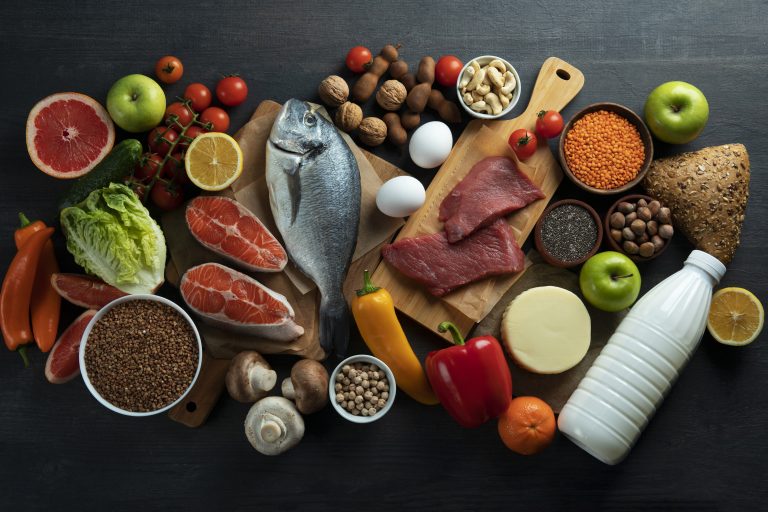
As a sports nutrition coach, I see it all the time: people stuffing their fridges with protein shakes and planning their day around protein intake. “More is better, right?” they often ask me. In my consultations, I regularly see athletes consuming 150-200 grams of protein daily, convinced that this is their ticket to success. Well, not necessarily.
Your body has a limit to how much protein it can use for muscle building at any one time. For the average recreational athlete, this is around 25-30 grams per meal (0.4 grams per kilogram of body weight). Anything you consume above that will largely be converted into glucose or stored as fat. Not exactly what you're hoping for when you buy that expensive protein powder.
Science and what happens to excess protein
What many people don't realise is that protein processing is a complex process. Your body first needs to break down the protein into amino acids, transport these to your muscles, and use them there for recovery and growth. This process takes time and can become saturated.
A recent 2023 study shows that for trained women, 30 grams of high-quality protein immediately after training is optimal for stimulating muscle protein synthesis, while 15 grams proved insufficient.https://onlinelibrary.wiley.com/doi/10.1111/sms.14506). For the average recreational athlete, this equates to approximately 0.4 grams of protein per kilogram of body weight per meal, which for someone weighing 75 kilograms means around 30 grams of protein (https://jissn.biomedcentral.com/articles/10.1186/s12970-018-0215-1).
Research from 2024 confirms that spreading protein intake evenly throughout the day increases muscle protein synthesis by 25% compared to concentrating protein intake in the evening meal (https://www.frontiersin.org/journals/nutrition/articles/10.3389/fnut.2024.1388986/fullIt's more like watering a plant: a little and regularly works better than flooding the garden once a day.
The body lacks a mechanism to store amino acids. Excess amino acids are converted to glucose via gluconeogenesis or broken down.https://www.mayoclinichealthsystem.org/hometown-health/speaking-of-health/are-you-getting-too-much-proteinWith a calorie surplus, this glucose can eventually be stored as fat.https://www.metabolic-health.co.uk/post/what-happens-to-the-excess-protein-we-eat-its-stored-as-fat-or-converted-to-sugar).
This means that the extra protein shake after a meal of 30 grams of protein will not be optimally utilised for muscle building. You'll be paying for expensive powder when your body has already received sufficient building blocks.
What you truly need and the financial reality
In my practice, I usually advise recreational athletes to consume around 1.2 to 1.6 grams of protein per kilogram of body weight per day. For someone weighing 75 kilos, that means approximately 90-120 grams of protein. This is easily achievable with a normal diet.
Let me walk you through a typical day. A piece of chicken for dinner (25g protein), Greek yogurt as a snack (15g), an egg for breakfast (6g), some nuts: a handful of almonds (6g), a slice of bread with cheese (8g), a glass of milk (8g). Before you know it, you're already at over 68 grams of protein from ordinary food. Add a portion of fish for lunch (20g) and you're already at 88 grams. That's within the recommended range, without expensive supplements or forced protein bombs.
The beauty of it is that this approach is also much more sustainable. No stress about timing, no panic if you forget your shake, no stomach upset from too much protein powder. Just normal, tasty food that also happens to perfectly align with what your body needs.
Let's be honest about the costs. A €50 tub of protein powder might last a month if you have two shakes daily. That's €600 a year on supplements alone. For the same amount of money, you could buy quality meat, fish, eggs, and dairy for months. Food that not only contains protein but also essential vitamins, minerals, and other nutrients that supplements lack.
For example, sardines cost €2 for 23g of protein, cottage cheese around €1.50 for 23g of protein per portion. All cheaper than protein powder per gram of protein, with added nutritional value.
Professionals are different and my practical advice
For professional bodybuilders, different rules apply. They train intensively, their entire lives revolve around muscle mass, and every gram counts. Their bodies are under constant stress and require more building materials. These athletes often have the guidance of nutrition experts who know exactly how to utilise the extra protein.
Recent research from 2024 indicates that older adults (aged >60) require meals containing at least 2.8 grams of leucine (~30 grams of protein) to stimulate muscle protein synthesis, whereas younger adults (<30) have a more linear response (https://www.frontiersin.org/journals/nutrition/articles/10.3389/fnut.2024.1388986/full. If you go to the gym three times a week, you're not a professional athlete. And you don't need to be.
Focus on varied, nutritious meals with a good protein source at each one. Think about meat, fish, eggs, dairy, pulses, and nuts. Spread your protein intake throughout the day and stop obsessively counting grams.
A practical distribution could be:
- Breakfast25-30g protein (eggs, Greek yogurt, milk)
- Lunch25-30g protein (chicken, fish, cheese, legumes)
- Dinner25-30g protein (meat, fish, tofu)
- Snacks15-20g protein (nuts, cottage cheese, milk)
This gives you a total of approximately 90-110 grams of protein per day. Perfect for most recreational athletes.
Listen to your body. Are you feeling well? Are you recovering well from your training sessions? Are you seeing progress? Then you're probably doing just fine. Your body is getting what it needs, your wallet will be happy, and your results will remain good.
Sometimes simple is the best advice I can give. And that’s certainly true for protein intake.
Get more out of every workout
Discuss your situation during a personal initial consultation.