
How should you eat and drink as a water polo player?
Published: 25 April 2026
Last updated: 25 April 2026
Reading time: 5-7 minutes
Categories By Sport
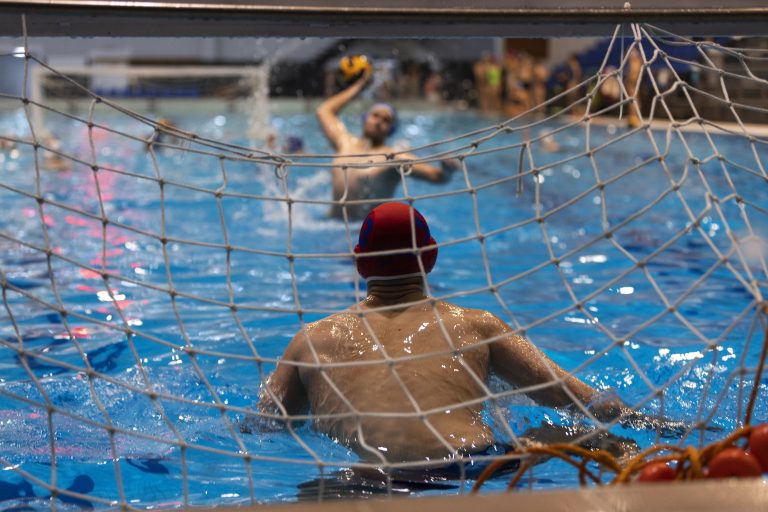
From the age of thirteen to twenty-seven, I played water polo. For the first six years, I also competed in swimming, meaning I trained eight times a week during that period: five times swimming and three times water polo, often with a match at the weekend. Secondary school and my studies suffered a little as a result, but oh well. Priorities, right? Later, from the age of forty to forty-six, I took up water polo again. I’ve now stopped for seven years. In total, about twenty years of water sports, at my peak in the First Division Bond: the second-highest division of the national league competition.
At that time, I wasn't concerned with sports nutrition. I ate whatever was put on the table at home. Sometimes I'd get stitch from drinking too much just before training. I also occasionally experienced calf cramps during matches, which was probably due to not drinking enough. I also regularly ran out of energy in the final quarter, while others seemingly could carry on. In retrospect, I think my sports nutrition had everything to do with it.
Well, as a sports nutrition coach, I know: water polo requires a specific nutritional approach. It combines explosive power with endurance, but it has two unique challenges that you don't encounter with land-based team sports.
Why water polo is different from land-based team sports
Water polo is similar to football or hockey: intermittent, sprinting, tactics, teamwork. The nutritional basis is also similar: lots of carbohydrates, good hydration, smart timing around matches. But there are two big differences.
First of all, you don't notice you're sweating. The water washes everything away immediately. In football or hockey, you feel your shirt get wet and know you're losing fluids. In water, your brain receives no signal, while your body loses just as much fluid. Sometimes even more due to warm swimming pools. Recent research on young water polo players shows that this hidden fluid loss is one of the biggest challenges.https://www.sciencedirect.com/science/article/pii/S240584402417199XYou seem to emerge from the water “dry”, but you can be more dehydrated than a footballer coming off the pitch dripping.
Secondly: water offers five times more resistance than air. A sprint in the water requires a lot more energy than a sprint on grass. Your energy consumption per minute is higher than in comparable team sports on land.
The nutritional advice is largely the same as for other team sports, but because of those two differences, you especially need to think differently about hydration and your total carbohydrate needs.
Carbohydrates and protein: the fuel for water polo
For water polo, carbohydrates are the primary fuel source. A match consists of four quarters, the duration of which depends on the level: at the highest level (Eredivisie, international) eight minutes of playing time, at a lower level often five to six minutes. In which you are constantly moving: sprinting, wrestling for position, shooting, defending. Recent research into sports nutrition for water polo emphasises that this combination of strength and endurance requires a hybrid nutritional strategy.https://pmc.ncbi.nlm.nih.gov/articles/PMC12029977/).
You need 8 to 10 grams of carbohydrates per kilogram of body weight per day, depending on training volume. For a 70 kg water polo player, that's 560 to 700 grams per day. With three training sessions per week plus weekend matches, you are asking an enormous amount of your body.
If you regularly run out of energy in the final quarter, a lack of carbohydrates is often the cause. This used to happen to me frequently. Your glycogen stores are simply depleted. A water polo match with four quarters is incredibly demanding, and without enough carbohydrates, you won't be able to give your all in the last quarter.
In addition to carbohydrates, water polo players also need relatively more protein than pure endurance athletes: 1.6 to 2 grams per kilogram of body weight per day. You can get this from meat, fish, dairy, eggs, legumes, and nuts. Distribute your protein intake throughout the day, as your muscles can only process a certain amount at a time.
It's also important to spread your meals evenly throughout the day. Not one giant mountain of pasta in the evening, but regular meals. This will keep your energy levels stable and ensure your body can absorb and store carbohydrates better.
Drinking: the hidden danger
You can get dehydrated while playing water polo. Your performance deteriorates with as little as a 2 per cent loss of fluids. Back then, I was completely unaware of this. In my day, there were no water bottles at the side of the pool either. You see that more often with teams now, but it hardly ever happened in my youth.
I had two opposing problems with drinking. Sometimes I drank too much just before training or a match and then got a stitch. But I also sometimes got calf cramps during matches, which was probably due to not drinking enough. Water polo is intense. A match, including the warm-up, quickly takes up one and a half to two hours. Without regular drinking, you lose electrolytes, especially sodium, which can lead to cramps. Finding the balance between enough but not too much is crucial.
Start with a good foundation. Four hours before your training or match, drink 5 to 7 millilitres per kilogram of body weight. For someone weighing 70kg, that's about half a litre. Check your urine: pale yellow is good, dark means drink more. And don't drink large quantities right before exertion. That can lead to side stitch.
Nowadays, you see teams having water bottles on the side more and more often. Swimming to the side and drinking between sets works well. For training sessions longer than an hour and a half, you can consider an isotonic sports drink for extra carbohydrates and electrolytes. For shorter training sessions, water is sufficient. During competitions, you can drink between quarters. Make sure your water bottle is within reach.
Matchday: eating without problems
A water polo match requires planning. You want to have energy without a full or heavy feeling in your stomach. Plan your last big meal two to three hours before your match. A meal high in carbohydrates, moderate in protein, low in fat and fibre works best. Think of white rice with chicken, pasta with tomato sauce, or toast with egg. No wholemeal, fatty fish, or pulses just before a match. They are healthy, but not right now.
Timing is crucial. Fat and fibre slow down digestion. A cheese sandwich will sit heavily on your stomach for hours and can cause discomfort during your competition. During intensive exertion, your body sends blood to your muscles instead of your stomach, causing digestion to stall and leaving you with a full, heavy feeling or even nausea.
Between quarters, you have short breaks. You can drink, but eating is difficult. Make sure you are well-fuelled before the match. If necessary, take small sips of isotonic sports drink between quarters for some extra carbohydrates.
In tournaments where you play multiple matches in one day, it becomes more important to keep eating between matches. Small portions with mainly carbohydrates and some protein: a peanut butter and banana sandwich, a muesli bar with yoghurt, rice cakes with honey. Easily digestible and effective. If you only have one to a few hours between matches, opt for more easily digestible carbohydrates like white bread, sports drinks, or a ripe banana.
Recovery after training and matches
At the time, I didn't do anything with it. My training sessions were in the evenings, and I didn't eat anything afterwards. No wonder I was still tired the next day.
The old idea of a thirty-minute ‘recovery window’ is outdated. You have several hours if you've eaten before training. Only when training on an empty stomach is it advisable to eat within one to two hours.
The key is: total daily carbohydrates and protein. A combination of three parts carbohydrates to one part protein works well. Chocolate milk, a cheese sandwich and banana, yoghurt with granola. For tournaments with multiple matches per day: faster-digesting carbohydrates such as white bread, rice cakes or sports drinks, as you often only have one to a few hours between matches.
Getting practical
Sports nutrition doesn't have to be complicated. During training periods, make sure more than half of your plate consists of carbohydrates, and don't forget your protein: 1.6-2 grams per kilogram of body weight spread throughout the day. Plan your last big meal three hours before competitions. Drink between exercises and between quarters. Check your urine colour: light yellow is good, dark is insufficient. Experiment during training to see what works for you.
Had I known then what I know now, who knows, I might have performed even better. I could have prevented that side stitch from drinking too much, and the calf cramp from better hydration, as well as that energy deficit in the last quarter. Because although water polo is similar to land-based team sports in terms of nutrition, there are two crucial differences: hidden fluid loss and higher energy expenditure. With the right knowledge, nutrition becomes not a cause of problems, but a tool for better performance.
Do you want to know how to improve your athletic performance through smarter nutrition? Then sign up for my free Masterclass Sports Nutrition Basics. To register, click here.
Get more out of every workout
Discuss your situation during a personal initial consultation.