
What does a gymnast really need? On fuel, growth and good food
Published: 11 May 2026
Last updated: 11 May 2026
Reading time: 7-9 minutes
Categories By Sport
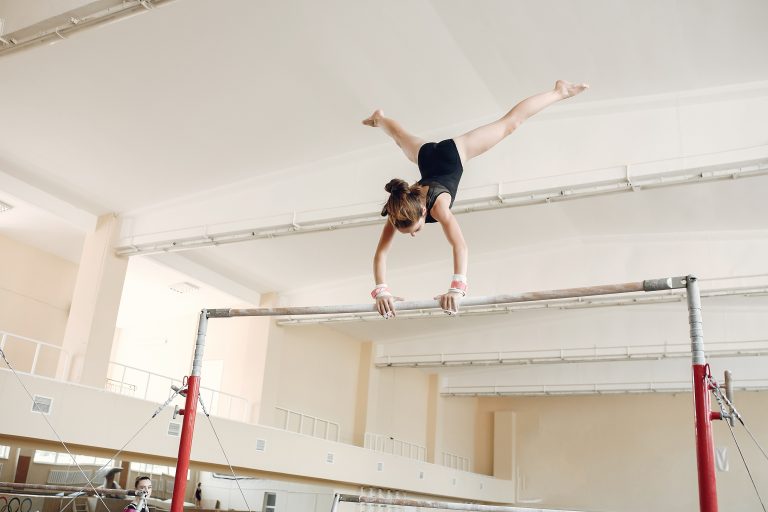
You train two, three times a week. Not for the Olympics, but because you simply enjoy it. Still, your body deserves good fuel. This article is about sports nutrition for recreational trampolinists and gymnasts. And emphatically also for children, as gymnastics is largely practised by them.
How much energy do you actually need?
Recently I was speaking with a gymnastics club about sports nutrition. The conversation quickly turned to the children: what do they eat before training, what about growth, and are they allowed to eat pretty much anything? Good questions, and ones I hear often. Gymnastics and general gym activities are inherently youth sports, and in this article I'm therefore paying explicit attention to that group. But for the adult recreational gymnast or gym-goer too, a good understanding of nutrition makes all the difference.
Furthermore, gymnastics and general fitness are sports where the body is visible: in the gym, during competitions, in the mirror. This aesthetic element isn't something you can simply disregard. It's part of the sport, and it influences how athletes and their surroundings view nutrition and weight. This makes it all the more important to establish a healthy foundation: not dieting, but eating well.
How much energy someone precisely needs varies from person to person. Body weight, age, gender, training intensity, and activity level all play a part, and that combination is different for everyone. Common guidelines such as “2000 kilocalories for women, 2500 for men” are averages for the general population and say little about what an active athlete truly needs. Those who regularly do gymnastics or gym will structurally need more than that norm suggests, and the more and more intensely someone trains, the greater that difference.
What is universally true is that most recreational and competitive gymnasts underestimate how much energy the sport requires. Gymnastics looks less demanding than it is. There are no long distances to cover, no visible sweat after five minutes. However, explosive power, concentrated technique, and repeated body control demand serious fuel. Anyone who consistently eats too little will notice it sooner or later: in a lack of recovery, stagnating performance, or a body that gets injured more often than it should. Do you want to know what your specific needs are? That's exactly where Personal sports nutrition advice for it.
Carbohydrates, protein, and fat: what do gymnasts actually gain from them?
Gymnastics and general keep-fit exercises are sports requiring short, explosive bursts of effort: a jump, a powerful swing, a beam routine performed in a matter of seconds. The body primarily uses carbohydrates for this, stored as glycogen in the muscles, and this means that supply needs to be maintained. Anyone who eats too few carbohydrates notices this immediately: precision disappears, muscles react more slowly, and the technical quality of movements declines. That's not vague or theoretical; it's simply chemistry.
A sensible starting point for a recreational gymnast is an intake of 3 to 5 grams of carbohydrates per kilogram of body weight per day. On a training day, this can be on the higher side: a plate of rice or pasta, some fruit in between, an extra slice of bread. On a rest day, slightly less is fine. Porridge in the morning, wholemeal bread for lunch, potatoes or rice for dinner: the basics are not complicated. A ripe banana before training does the trick, as does a handful of dates if you're short on time.
Then there's protein. Turners demand a lot from their muscles. Not just during training, but also in the hours afterwards, when the recovery process begins. Muscle tissue is broken down and rebuilt, and protein is indispensable for this. For recreational athletes, an intake of 1.2 to 1.6 grams per kilogram of body weight per day is a good starting point; those who also do strength training or train more intensively can aim for 1.8 grams. This is easier to achieve than it sounds: a pot of quark for breakfast, a chicken fillet for lunch, a portion of legumes or tofu for dinner. If you vary your diet well, you'll typically reach that amount without actively thinking about it, and certainly without supplements.
Fats sometimes get a bad rap in sports nutrition circles, but for gymnasts, they are actually important. They aid in the absorption of fat-soluble vitamins A, D, E, and K, all of which play a role in bone health, recovery, and immune function. Furthermore, fats are necessary for hormone production, which is especially relevant for young, growing athletes and for women susceptible to hormonal disruptions. Consequently, a diet that is too low in fat is not a smart choice for gymnasts. Nuts, avocado, olive oil, and oily fish are excellent sources that can be easily incorporated into a regular diet.
When you eat, it also counts
Gymnastics and general keep-fit activities are sports where timing is more important than in many other pursuits. A full stomach just before a training session involving a lot of rotations and star jumps is no pleasure. But training on an empty stomach is just as ill-advised: concentration diminishes, coordination becomes less sharp and the chance of errors increases.
If you eat a regular meal two to three hours before training, such as rice with chicken or porridge with quark and fruit, you won't need anything extra afterwards. If training is closer, then a small, easily digestible snack is ideal: a ripe banana, a couple of rice cakes, or a handful of dates. Avoid large amounts of fat or fibre at this time, as these slow down digestion and are heavier on the stomach.
During training sessions shorter than an hour and a half, water is sufficient. Those who train for longer or link multiple sessions together may benefit from a small source of carbohydrates in between: a sports drink, a piece of fruit, or an energy gel. However, for most amateur trampolinists and gymnasts, this is not necessary.
After training comes recovery. The body is then receptive to nutrients, and a meal or snack with both protein and carbohydrates, such as chocolate milk, quark with a ripe banana, or simply the evening meal, helps kick-start that process. This is also precisely why you shouldn't skip your evening meal after a late training session. Many gymnastics training sessions don't finish until nine or half past nine in the evening, and the temptation to not eat anything then is understandable. But the body needs that recovery period. Sleep is the most powerful recovery factor there is, and the body does that work best when it has received the building blocks for it.
Nutrition for children who do gymnastics or tumbling
Gymnastics and gym are ideal children's sports. Most gymnastics clubs have more junior members than adult members, and that's no coincidence: the sport perfectly matches children's natural urge to move and their body awareness. But it's precisely for these young gymnasts that nutrition deserves extra attention. Not because you have to be strict about what they eat, but because they use energy on two fronts simultaneously: they are growing and they are exercising.
That sounds obvious, but in practice it is often underestimated. A nine-year-old child who goes to gymnastics club three times a week has a relatively high energy requirement for their body weight. This also applies to days when there is no training, because growth continues regardless. Deficiencies at a young age are not easily caught up. They can inhibit bone development, disrupt growth spurts, and in the long term, contribute to a greater susceptibility to injury.
Building your 'bottom' while you're still young
Childhood and early puberty are the most important periods for bone building. What a child builds up during this phase largely determines how strong their bones will be later on. This is particularly relevant for gymnasts, as stress fractures, particularly in the wrist, foot, and back, are a common injury in the sport. Good bone formation begins with sufficient calcium and vitamin D.
Calcium is abundant in dairy products: milk, yoghurt, and cheese are the easiest sources for most children. However, green vegetables like broccoli and kale, tahini (sesame paste), and calcium-fortified plant-based milk also make a good contribution. For children between 9 and 18 years old, the recommended intake is 1000 to 1300 mg per day: roughly three to four portions of calcium-rich food daily. It's not an exact science at the dinner table, but simply ensuring it's consistently included.
Vitamin D deserves special attention in this regard, especially for children who spend a lot of time indoors exercising. The skin produces it through sunlight, but this is insufficient during Dutch winters. More on sensible supplementation can be found later in this article in the supplements section.
Enough energy, even on school days
Children who play sports need more energy than children who don't. It's an open secret, but in practice, many young athletes still eat too little. This is sometimes due to a busy schedule (school, homework, training), sometimes due to appetite differences throughout the day, and sometimes simply because children don't always sense when they've eaten enough.
Practically, this means: ensure a good breakfast before school, a substantial lunch or snack in the afternoon, and a meal or snack before training. If a child has to go straight from school to the gym, a peanut butter sandwich or a ripe banana with some yoghurt is a good interim solution. After training, especially if it's in the evening, a recovery meal is preferable to skipping it. A warm meal or at least something with both carbohydrates and protein helps the body recover overnight.
Iron, puberty and girls
As soon as girls reach puberty and their menstrual cycle begins, their iron requirements increase significantly. Iron is essential for the production of red blood cells and therefore for oxygen transport to the muscles. An iron deficiency doesn't just cause tiredness; it also reduces stamina and concentration, which is immediately noticeable in a technical sport like gymnastics.
Meat (especially red meat and liver) is the richest source of easily absorbed iron, but pulses, dark leafy greens, and whole grains also contribute. A handy tip: eat iron-rich plant-based foods with something containing vitamin C: a glass of orange juice with your main meal, or a bell pepper in a salad, as this significantly improves absorption. Conversely, avoid coffee or tea right next to an iron-rich meal: they hinder absorption.
What parents and coaches can do
For parents, the message is not complicated: ensure regularity, variety, and sufficient quantity. A child who eats well doesn't need to be monitored with a nutrition app or kitchen scale. What *does* help is being aware of the training schedule and adjusting the eating pattern slightly accordingly. Training days require a bit more, rest days a bit less. But drastic differences are neither necessary nor desirable for children.
Trainers and coaches also bear a responsibility. Comments about weight or body shape, even well-intentioned ones, can have a greater impact on young athletes than the adult realises. A child who learns early on that their body is “too heavy” or “too big” runs an increased risk of developing a disordered relationship with food. Especially in a sport like gymnastics, where the body is so central, a positive environment surrounding nutrition and body image is not a luxury but a necessity.
Weight, pressure and a risk that deserves a name
It's only fair to mention this: gymnastics is a sport where the body is visible, judged, and sometimes also under pressure. A lighter body helps with certain elements: higher leaps, faster rotations, and in competitive gymnastics, aesthetics play a part in the judging. That makes weight a subject that is never far away in the gymnastics world.
This pressure has consequences. Gymnastics and other aesthetic sports, such as rhythmic gymnastics and figure skating, are among the sports where eating disorders are most prevalent. Research by Sundgot-Borgen and Torstveit (2004), one of the largest studies in this field, conducted among more than 1,600 Norwegian elite athletes, showed that 42.1% of female athletes in aesthetic sports exhibited signs of an eating disorder, compared to 16.1% in ball sports. This specifically concerns sports in which body aesthetics form part of the assessment, including gymnastics. The full publication can be found at doi.org/10.1097/00042752-200401000-00005.
Recent studies also confirm this pattern for younger and less elite gymnasts. A 2024 study of adolescent acrobatic gymnasts (doi.org/10.3390/jpm14040363) demonstrate that energy deficiency and low bone density also occur regularly in this group, not just in elite athletes.
This energy deficit has been given a name in sports science: Relative Energy Deficiency in Sport (RED-S). It arises when energy intake is structurally lower than what the body consumes. Not as a conscious choice, but often as a result of underestimation, external pressure, or a disturbed relationship with food. The signs are concrete: explosiveness disappears, coordination deteriorates, injuries mount up, menstrual disorders can arise in women, and bone density decreases. Psychologically, many athletes become irritable and increasingly focused on food.
RED-S: when not eating enough becomes a medical issue
RED-S is not a conscious choice. It is a medical condition that is significantly more common in aesthetic sports such as gymnastics than in other sports. The consequences go beyond fatigue: bone health, hormone balance, immune function, and mental health are all affected. Anxiety around food, absence of menstruation in girls, recurring stress fractures, or persistent exhaustion that doesn't resolve with rest are signals that demand attention. Both from the athlete themselves, as well as from parents and coaches.
Read it Full article on recognising RED-S in athletes
However, it is important to put this in the correct context. Weight management in athletes, and especially in young athletes, is something that should be done carefully and preferably under supervision. If there is a desire to lose weight, then always outside the competition season, never faster than half to one kilo per week, and always with sufficient protein to maintain muscle mass. In children and teenagers, weight restriction is desirable in virtually no case: they need all their energy to grow and to participate in sports.
What it's really about is recognising signs that point to an unhealthy relationship with food or a too low energy level. Read more about what RED-S is and how to recognise it in the article mentioned above.
Supplements: useful or not?
The supplements industry is big, loud, and good at making promises. For most recreational tumblers and gymnasts, a good basic diet will yield more than any supplement. Nevertheless, there are a few worth knowing about.
Vitamin D is almost universally relevant for indoor athletes in the Netherlands. The skin produces it through sunlight, but those who spend most of their sporting hours in a gym or don't get out much don't build up sufficient reserves. Especially during the winter months. Daily supplementation of 10 to 25 micrograms is sensible for both children and adult gymnasts and is also recommended by the Netherlands Nutrition Centre.
As adults combining strength training with gym work can benefit from creatine. It increases the availability of quick energy for explosive efforts and supports muscle recovery. The scientific basis is solid and safety with normal use is well-founded. Creatine is not relevant for children and teenagers.
A protein powder can be a useful supplement when daily protein requirements are difficult to meet through regular food intake, but this is rarely necessary if the meal structure is in order. Omega-3 fatty acids, from oily fish or a fish oil capsule, support recovery and anti-inflammatory processes and are a beneficial supplement for those who eat little fish.
What you're better off leaving alone: fat burners and so-called metabolism boosters are risky and have little scientific backing. Collagen, as a protein source, provides too few essential amino acids to be beneficial. Detox products are unnecessary if you simply eat healthily.
Finally
Good food for a gymnast or gymnast isn't about being strict or tracking everything. It's about understanding what the sport demands of your body, and giving it the resources to deliver. A well-nourished body moves better, recovers faster, and stays healthier for longer. And for the recreational athlete who simply enjoys their sport, that's exactly what it's all about.
Do you have questions about your situation, your child's situation, or are you a gymnastics coach wanting to know more about nutrition within your club? TWINDO Sports Nutrition offers personalised sports nutrition advice, tailored to sport, age and goals.
Get more out of every workout
Discuss your situation during a personal initial consultation.