
Performing as an athlete on a plant-based diet. Is that really possible?
Published: 12 September 2025
Last updated: 12 September 2025
Reading time: 6-7 minutes
Categories General
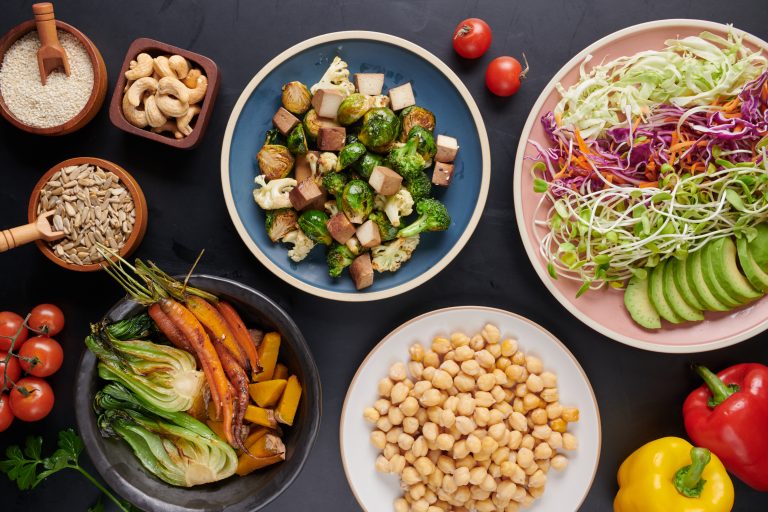
“Can I perform well without meat, fish, and dairy?” A question heard more and more often in conversations with athletes. As someone who delves into sports nutrition and is vegetarian myself, I see how this question occupies many recreational athletes who are considering becoming vegetarian or vegan. The times when plant-based nutrition was viewed with scepticism in the sports world seem definitively over. From local running groups to professional athletes, interest in plant-based nutrition is growing everywhere. But what does science actually say about it?
When talking to athletes, I notice that many are uncertain about plant-based nutrition. “Will I get enough protein without meat and dairy?” and “Won't I get weaker without animal products?” are questions that frequently come up. Fortunately, I can increasingly reassure them with confidence, thanks to the growing research in this area.
A comprehensive 2023 study found no differences in performance between vegetarian and omnivorous athletes in terms of endurance, muscle strength, and speed.https://pmc.ncbi.nlm.nih.gov/articles/PMC10647346/A large research summary from the same year even concluded that plant-based diets can improve endurance without compromising strengthhttps://www.cambridge.org/core/journals/british-journal-of-nutrition/article/plantbased-diets-benefit-aerobic-performance-and-do-not-compromise-strengthpower-performance-a-systematic-review-and-metaanalysis/4941919C8BC86865A35E56189831D8DF).
I must be honest: the picture is nuanced. A very recent review from 2025 shows that some studies still report challenges with very intensive or endurance sports, such as possibly more difficulty with muscle recovery after heavy strength training or lower energy availability during ultra-endurance sports.https://eajournals.org/ejbmsr/vol13-issue-3-2025/a-systematic-review-of-the-impact-of-vegan-and-plant-based-diets-on-sports-performance-of-athletes/). But at the same time, brand new research from June 2025 shows that plant-based diets have no adverse effect on muscle strength (https://sportsmedicine-open.springeropen.com/articles/10.1186/s40798-025-00852-7Confusing? Perhaps, but that's what makes it interesting.
What I find striking is that plant-based athletes often seem to have a certain advantage. Their diet is full of slow carbohydrates. Ideal for stable energy during longer workouts. Plus all those fibres, vitamins, minerals and protective substances that ensure better recovery and less inflammation. Athletes I speak with often say they feel more energetic and recover faster since switching to a plant-based diet. Coincidence? I don't think so.
Proteins: the major question mark solved
“Where do you get your protein from?” If I had a penny for every time I heard that question...! Let me reassure you: it's easier than you think. For recreational athletes, the current recommendation is between 1.2 and 2.0 grams of protein per kilogram of body weight per day, depending on your training intensity. Some experts advise plant-based athletes to stay at the higher end of this range due to the potentially lower digestibility of plant-based proteins, but this is not universally accepted.https://www.nomeatathlete.com/protein-for-athletes/).
For an athlete weighing 70 kilograms, this equates to approximately 84-140 grams of protein per day. It's good to show how you can easily achieve this with plant-based sources. Think about a breakfast with yoghurt and nuts, a lunch with bread and peanut butter, and a dinner with pasta and lentils. Before you know it, you'll have reached your daily amount.
The beauty of it is that several large studies have shown that plant-based proteins are just as effective for muscle growth as animal proteins, provided you eat enough.https://www.pcrm.org/good-nutrition/nutrition-for-athletesA study compared 19 vegans with 19 omnivores over 12 weeks of strength training: no difference in results! The tip that emerges from research: distribute your protein over 4-6 meals of approximately 23-28 grams each. This way, your muscles get their building blocks throughout the day.
Recent research confirms what is becoming increasingly clear: vegetarian athletes who consumed between 1.2 and 2.0 grams of protein per kilogram per day recovered just as well as their omnivorous counterpartshttps://pubmed.ncbi.nlm.nih.gov/40292443/So that protein recommendation? Absolutely fine if you approach it smartly.
Points of attention: where extra care is important
Now comes the most important part, because eating plant-based for athletes does require some extra attention. It's like a puzzle: all the pieces need to fall into place. Important to emphasise beforehand: always have your levels tested by your GP before starting supplements. Supplementation only makes sense in cases of actual deficiencies.
Vitamin B12 likely presents the biggest challenge. Around half of vegans have low B12 levels (https://www.ncbi.nlm.nih.gov/pmc/articles/PMC6566694/This is really no small matter. B12 is crucial for your energy and red blood cells. A long-term deficiency? That can cause permanent nerve damage. Fortunately, with a confirmed deficiency, the solution is simple: 250 micrograms a day or 2500 micrograms a week.
Iron is the second important point. Yes, plant-based iron is less well absorbed than from animal sources, but your body is clever and adapts (https://pmc.ncbi.nlm.nih.gov/articles/PMC10647346/A handy tip? Always combine your iron-rich spinach or lentils with vitamin C: a glass of orange juice or some bell pepper on the side. And avoid coffee during your iron-rich meal, as it blocks absorption.
Zinc is often forgotten, but it's so important for your recovery and immune system. In a study of runners, half of the vegans had insufficient zinc (https://www.ncbi.nlm.nih.gov/pmc/articles/PMC6566694/Good sources? Pumpkin seeds, cashews and chickpeas. Tasty and effective.
Smart Additions: Supplements That Can Make a Difference
It’s important to emphasise this from the outset: supplements are only the final 5 to 10% of your optimisation. A well-balanced diet is always the foundation. To find out more about when supplements are or aren’t worthwhile, read this: https://twindo-sportvoedingsadvies.nl/voeding-versus-supplementen/
There are a few supplements that are particularly interesting for plant-based athletes:
Creatine is at the top of the list. Vegetarians and vegans naturally have lower creatine levels in their muscleshttps://jissn.biomedcentral.com/articles/10.1186/s12970-017-0192-9), which can actually be an advantage. They often respond better to supplementation! It's common to see plant-based athletes benefiting more from creatine than their omnivorous training partners.
My recommendation? Just 3-5 grams of creatine per day, without complicated loading protocols. This works fantastically for short, explosive efforts and muscle growth. For a complete guide to creatine, I've written a separate blog: https://twindo-sportvoedingsadvies.nl/creatine-supplement-gids-sporters/
Beta-alanine is a second interesting option. Vegetarians and vegans have lower carnosine levels. This is the substance that helps combat acidification during intense training.https://jissn.biomedcentral.com/articles/10.1186/s12970-017-0192-9Take 4-6 grams per day for a month and your explosive performance might increase. Watch out for the tingling in your fingers, that's normal!
For endurance athletes, an algae oil supplement might be of interest for those omega-3 fatty acids you normally get from oily fish.
Practical tips for success
The research I've looked at suggests a few useful guidelines:
Timing remains important: Distribute your protein intake evenly throughout the day and eat something with 20-25 grams of protein plus carbohydrates within two hours of training. A smoothie with banana and protein powder? Perfect.
Don't forget the salt. Plant-based foods naturally contain little sodium. This is great for your health, but you need to compensate for this during long training sessions. It's common to see plant-based athletes feeling dizzy because they're not getting enough salt.
Where do we stand now? A fair assessment
Looking at all the recent research, I see a nuanced but hopeful picture. Large studies from 2023 and 2025 agree: a well-planned plant-based diet does not disadvantage athletes.https://www.sciencedirect.com/science/article/pii/S266614972400029XSome research even shows benefits for certain sports, although there is still discussion about the effects in very long-term or intensive efforts.https://eajournals.org/ejbmsr/vol13-issue-3-2025/a-systematic-review-of-the-impact-of-vegan-and-plant-based-diets-on-sports-performance-of-athletes/).
What does this mean for you? That you can opt for plant-based for any reason; ethical, environmental, health, without sacrificing your performance. Increasingly, you see plant-based athletes keeping up with or even surpassing their omnivorous training partners.
The latest research from 2025 confirms what is becoming increasingly clear: with good planning, athletes on a plant-based diet can perform perfectly well.https://sportsmedicine-open.springeropen.com/articles/10.1186/s40798-025-00852-7The idea that animal products are essential for peak performance therefore appears more nuanced than often thought.
However, and this is important, it does require more attention than a standard omnivorous diet. You have to think about B12, iron, zinc, and intelligently combine your proteins. Is it worth it? Considering how plant-based athletes can thrive, the answer increasingly seems to be: absolutely.
So the question is not whether you can perform on a plant-based diet. The question is how well you want to approach it!
Get more out of every workout
Discuss your situation during a personal initial consultation.