
How athletes use carbohydrates smartly for peak performance and faster recovery
Published: 20 August 2025
Last updated: 12 December 2025
Reading time: 6-7 minutes
Categories Carbohydrates, Proteins and Fats
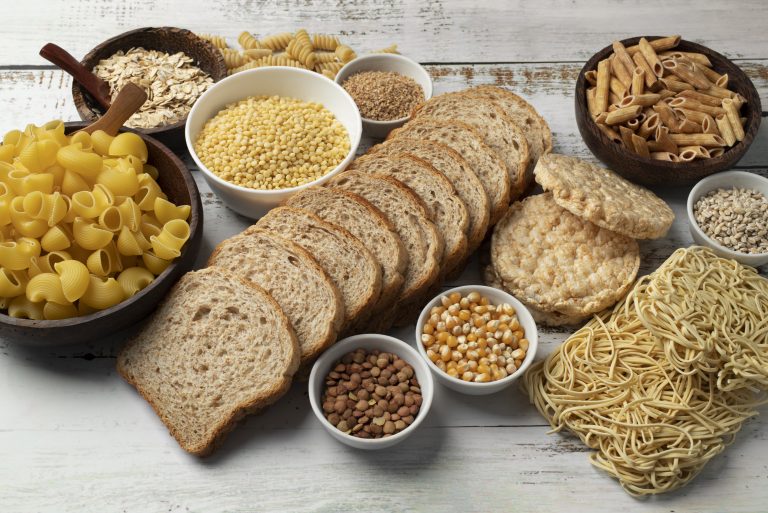
Carbohydrates often get a bad rap. Fattening, unhealthy, unnecessary – these are the stories you hear. But carbohydrates are essential for athletes' performance. It's not about *whether* you eat carbohydrates as an athlete, but *when* and *which* ones. Learn here how sports nutrition with carbohydrates can improve your performance.
Why carbohydrates are so important for athletes
Carbohydrates for athletes are essentially the fuel for your body. They are stored as glycogen in your muscles and liver, your personal energy tank. As soon as you start exercising intensely or play a match, your body uses this supply for quick energy.
If you don't consume enough carbohydrates, your performance will suffer, you'll feel tired more quickly, and your recovery will take longer. This is precisely what carbohydrates are meant to prevent for athletes. For recreational and amateur athletes, this means the difference between a good and a bad training session. Your glycogen stores are limited and deplete during intensive exertion. Without replenishment, your body switches to fat metabolism, which is much slower and reduces your performance.
The beauty of carbohydrates is that they are immediately available as fuel. Unlike fats, your body doesn't need to convert them first. That's why they are essential for explosive movements, fast sprints and anything requiring power. Your brain also runs on glucose, so sufficient carbohydrates keep you sharp and focused during competitions.
Not all carbohydrates are created equal. There are two main types that every athlete should know about. Fast carbohydrates, also known as simple carbohydrates, are found in fruit, honey, sports drinks, and sweets. They enter your bloodstream quickly and provide immediate energy, perfect during or immediately after your training.
Slow carbohydrates, on the other hand, are found in wholemeal products, rice, potatoes, and pulses. They provide sustained energy and keep your blood sugar stable. You should consume these well before your training or competition to lay a solid foundation.
An interesting discovery is that your body uses different transport pathways for different sugars. For example, glucose and fructose take different routes, allowing your body to process more carbohydrates per hour when you combine them. This is why modern sports drinks usually contain a mix of both.
Not every sport has the same carbohydrate requirements. For explosive sports such as sprinting, weightlifting, or gymnastics, your muscles rely on readily available glycogen. These athletes benefit from sufficient carbohydrates before their training, but usually do not need to eat anything extra during the activity itself.
Endurance athletes such as cyclists, swimmers and runners, on the other hand, need to constantly refuel their fuel tank. They benefit from a strategy where they consume carbohydrates both before, during and after their effort.
Team sport athletes fall somewhere in between. Footballers, basketball players, and hockey players alternate explosive actions with rest periods. They benefit from a good foundation of slow carbohydrates, supplemented with fast carbohydrates during rest or afterwards.
The correct timing of carbohydrates around training and competition
The art of carbohydrates for athletes lies in timing. One to three hours before your training or competition, you want to consume easily digestible carbohydrates with relatively few fibres. Think of oatmeal, white pasta, or a banana with peanut butter. As a guideline, you can aim for 1 to 4 grams of carbohydrates per kilogram of body weight, but timing makes the difference. If you eat 3-4 hours beforehand? Then you can aim for those 4 grams. If you eat 1-2 hours before your training? Stick to 1-2 grams per kilo.
Pay close attention to the dangerous time window: avoid fast carbohydrates between 60 and 15 minutes before the start. This will first cause a sugar spike, but due to the insulin response, your blood sugar may actually become too low once you start exercising. This is called rebound hypoglycaemia and can significantly damage your performance. Do you still want to eat something just before the start? If so, do so within 5 minutes of your start.
For endurance athletes whose activities last longer than 2.5 hours, it can be beneficial to aim for around 90 grams of carbohydrates per hour. This does require training your gut. Don't just start with large amounts during an important competition. Your digestive system needs to get used to processing food during exertion.
A practical tip: vary your sources during long efforts. For example, start with a sports drink, then switch to a banana, then an energy gel. This prevents you from getting bored and keeps it interesting for your taste buds.
Following your exertion, the recovery window opens. You have approximately two hours in which your body is most receptive to replenishing your glycogen. Combine fast-acting carbohydrates with some protein for optimal recovery. Chocolate milk, Greek yogurt with fruit, or a recovery shake work perfectly. Think 1 to 1.2 grams of carbohydrates per kilogram of body weight. For someone weighing 70kg, that's 70 to 85 grams.
Adding protein has an additional benefit. Besides helping with muscle maintenance and growth, it also slows down the absorption of carbohydrates. This leads to more stable blood sugar and keeps you feeling fuller for longer. An ideal ratio is approximately 3:1 or 4:1 carbohydrates to protein.
Practical tips for every athlete
As a recreational athlete, you don't need to overcomplicate things. Start simply: begin your day with porridge and fruit, have wholemeal bread for lunch, and choose rice or potatoes for your evening meal. Listen to your body and watch out for these common mistakes: completely avoiding carbohydrates leads to poorer performance and fatigue. Only eating quick sugars also causes a yo-yo effect in your energy levels. Never experiment with new products just before your training session; save that for easier workouts.
Sports nutrition doesn't have to be expensive. Bananas are one of the best and cheapest sources of energy out there. Oatmeal costs next to nothing and provides long-lasting energy. Dates are natural energy gels, and ordinary sugar in water can be a cheap alternative to expensive sports drinks.
Make your own energy bars from dates, nuts, and oats. Cook rice in advance and store portions in the fridge for quick meals. Buy fruit when it's in season and freeze it for smoothies. Small investments, big results.
Adjusting carbohydrates to your situation
Many athletes believe they should eat the same thing all year round, but your carbohydrate needs change depending on your training period. During the build-up phase, you can be a bit more generous with your carbohydrates. Your body needs the energy for heavy training and adaptations.
In the competitive phase, timing becomes more crucial. It then becomes about delivering performance at specific moments. You want to optimally fill your glycogen stores for important competitions without lugging around excess weight.
The rest period is precisely the time to slightly reduce your carbohydrate intake. You train less, so you need less fuel. Use this time to teach your body to burn fat more effectively again, which will benefit your endurance.
Everyone is different, and that certainly applies to how your body handles carbohydrates. Some people have a faster metabolism and can tolerate more carbohydrates without gaining weight. Others need to be more precise with their timing and quantities.
Your training history also plays a role. Trained athletes can usually process more carbohydrates per hour during exercise than beginners. Their gut is accustomed to digesting food during movement, and their muscles can store and utilise glycogen more efficiently.
Also pay attention to your body's signals. Do certain products give you stomach problems during exercise? Do you feel sluggish after certain meals? These are indications that you can adjust your approach.
A frequently asked question is whether carbohydrates make you fat. The answer is nuanced. Carbohydrates themselves don't make you fat, but too many calories do. As an athlete, you use a lot of energy, so you need that fuel.
The secret lies in the timing and quality. If you eat your carbohydrates around your workouts, your body uses them directly as fuel. If you eat them in the evening on the sofa, they are more likely to be stored as fat. Opt for quality carbohydrates that also contain fibre, vitamins and minerals.
For athletes who want to lose weight, the rule is: reduce your carbohydrates on rest days, but ensure you have enough around your training sessions. Otherwise, your performance will decline and weight loss will become harder because you burn less energy.
Carbohydrates for athletes aren't the enemy, they're your training buddy. The art lies in the timing and choice. Start small: add a banana before your workout, or drink chocolate milk afterwards. Small changes make a big difference.
Remember that carbohydrates are part of the overall picture. Proteins for muscle maintenance, healthy fats for hormone production, everything works together. But for energy and performance, carbohydrates are indispensable. Why deprive yourself? Just give your body the fuel it deserves for better performance!
Do you have questions about your specific situation? Don't hesitate to get in touch. Together, we'll make you a smarter athlete!
Get more out of every workout
Discuss your situation during a personal initial consultation.