
How the right sports nutrition takes your BJJ performance to the next level
Published: 18 September 2025
Last updated: 18 September 2025
Reading time: 4-6 minutes
Categories By Sport
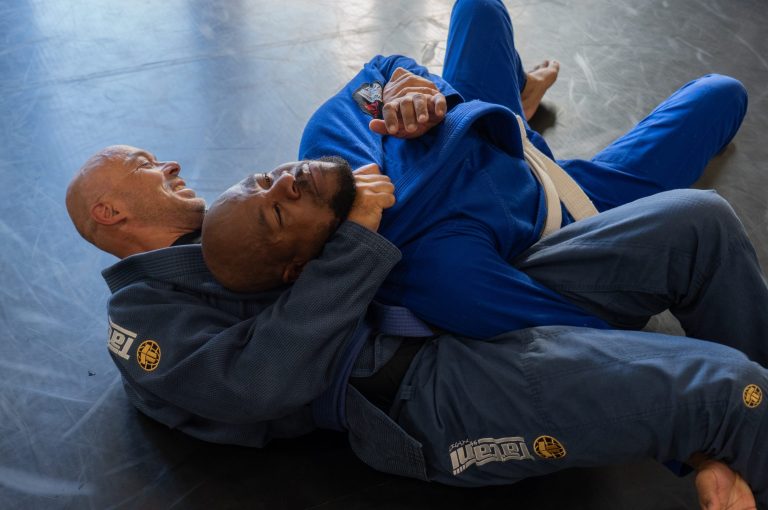
As a blue belt in Brazilian Jiu-Jitsu (BJJ) and a sports nutrition coach, I see how nutrition can make the difference between a good and a great training session. Drawing on my own experiences on the mats and my knowledge as a nutrition coach, I want to share how you can optimise your BJJ performance through smart nutritional choices.
These nutritional principles are also applicable to other grappling sports such as judo, wrestling, and recreational MMA. Sports with similar physical demands of explosive power and endurance.
My approach combines sports-specific nutrition with simplicity: vegetarian eating with targeted carbohydrate timing for intensive rolls, creatine for explosive strength, and electrolytes during training. On training days, I consciously consume more energy: precisely calculated for what I need for my sport. My nutrition is optimised, but not perfect. That doesn't exist, after all! It's about finding what works for you within the practicalities of daily life.
Since I've optimised my diet, things have improved. I can deliver more explosive power during those final rolls and recover slightly faster. But it's not exactly groundbreaking either. Nutrition is definitely an important piece of the puzzle, but there are more factors that determine the quality of your training.
BJJ places unique demands on your body. It's a sport that combines explosive power with endurance, mental sharpness, and technical precision. For me, the last twenty minutes of my training, when I roll three to four five-minute rounds, are incredibly intense. This is the moment when my body gives its all, and where good nutrition makes the difference between fighting through or giving up.
Energy supply for optimal BJJ performance
BJJ is an anaerobic sport with aerobic elements. When rolling, you constantly switch between explosive movements and shorter rest periods. For those intensive, explosive actions, glucose from carbohydrates is your primary fuel. Fats play a primarily supporting role during rest periods and for overall energy supply, but are not crucial for your immediate BJJ performance. Therefore, focus mainly on sufficient carbohydrates.
Before training, it’s important to keep your glycogen stores topped up. One to two hours before my evening training session, I eat a normal, carbohydrate-rich evening meal. Think pasta with tomato sauce and cheese, rice with vegetables and lentils, or a tasty stew. This gives me a steady supply of energy throughout the session. Ideally, I wouldn’t eat anything for at least two hours beforehand, but I don’t always manage that. This pre-workout meal consists of approximately 55–60g of carbohydrates (a mix of complex and some faster-acting carbohydrates for immediate availability), 20g of protein and 20–25g of fat. Ideal for rapid digestion and optimal energy supply whilst training.
What I've noticed is that too heavy a meal right before rolling works counterproductively. You feel sluggish and your body is busy digesting instead of performing. Furthermore, a full stomach is quite unpleasant when someone, for example, puts a knee on your belly. And let's be honest, farting during rolling is not pleasant for anyone. Finding the right timing and quantity is personal, but start with smaller portions and see how your body reacts.
After training, recovery is crucial. Within two hours of the session, I make sure to get a combination of protein and fast carbohydrates in a ratio of approximately 1:3. This is ideal for muscle protein synthesis and quickly replenishing glycogen stores. A protein shake with banana works perfectly. As a vegetarian, I use whey protein shakes and combine legumes with grains for complete proteins in my meals.
For more in-depth information about carbohydrates for athletes, I have written a separate blog post: https://twindo-sportvoedingsadvies.nl/koolhydraten-voor-sporters/
Hydration and electrolyte balance on the tatami
Sweating is unavoidable in BJJ. During an intensive training session, you can easily lose a litre or more of fluid. What many people underestimate is that you don't just lose water, but also important electrolytes such as sodium, potassium and magnesium.
On training days, I don't consciously drink extra, but I do make sure I get enough throughout the day. During my training, I use Waterfuze (https://waterfuze.com/water enriched with electrolytes. This helps to keep my performance stable without feeling full. I take another sip right before training, and I drink the rest of my bidon during training and between rolls.
A signal that I am well-hydrated is the colour of my urine. It should be light yellow. Dark yellow urine is a sign that I need to drink more. I also pay attention to headaches or dizziness, early signs of dehydration that can undermine your performance.
For comprehensive information on optimal hydration during sport, I refer you to my detailed blog: https://twindo-sportvoedingsadvies.nl/hydratatie-tijdens-sport/
Supplements that actually work for BJJ
As a sports nutrition coach, I'm critical of supplements. Most are a waste of money, but there are a few that can really make a difference for BJJ practitioners. I myself only take creatine as a supplement, because it's the only one I consistently benefit from. I also use protein shakes, but that falls more under sports-specific nutrition than supplementation.
Creatine monohydrate is at the top of my list. I've been taking three grams daily for five weeks, and the difference is noticeable. Especially during those intensive final twenty minutes of my training, I feel that I can continue to deliver explosive power during short, intense efforts. Creatine helps my muscles regenerate energy faster during explosive movements. Exactly what you need for BJJ.
The beauty of creatine is that it's simple and safe. Three grams a day is enough. You don't need to do a loading phase like was once thought. I mix it with my water or protein shake and I'm done. I've written an extensive blog post about creatine where I go into more detail on how it works and how to use it optimally: https://twindo-sportvoedingsadvies.nl/creatine-supplement-gids-sporters/
Other supplements like magnesium for muscle relaxation or omega-3 fatty acids for anti-inflammation can be useful, but I prefer to keep it simple. If your basic nutrition is in order, these supplements often make little difference. Focus on your diet first before considering supplements.
Meal timing around your BJJ training
The timing of your meals can make the difference between an energetic and a sluggish workout. Over the years, I've learned that consistency in timing is just as important as what you eat.
For my evening training at 20:30, I usually eat my carbohydrate-rich evening meal between 18:00 and 19:30. This gives my body enough time to digest without experiencing an energy deficit. As a vegetarian, I ensure I get enough protein through eggs, dairy, legumes, and nuts.
After my training, especially after those intense last laps, I often have little appetite. Yet, I force myself to eat something within an hour. A protein shake goes down easier than solid food at that point. Later in the evening, I keep it light with yoghurt and some granola. Full meals aren't realistic after a late training session.
Weekend training sessions are different because I have more flexibility. I can have a more extensive breakfast and have more room in my schedule. This makes it easier to keep my energy levels stable.
What I have learned is that your body gets used to routine. If you are consistent with your meal timings, your body knows when to supply energy. This helps not only physically, but also mentally. You are more self-assured because you know your body is ready.
Practical tips for the BJJ practitioner
Consistency is important. I do my best to get as close as possible to my recommended macronutrient distribution for my meals. Not perfect, but consciously optimised for my sports goals. Meal prep doesn't have to be complicated: simple meals with good proportions of all macronutrients work perfectly.
Listen to your body. Everyone reacts differently to food and timing. What works for me isn't necessarily your optimal strategy. Experiment and keep track of what works.
Remember that nutrition is a tool, not a miracle cure. Technique, consistent training and sufficient rest remain the foundations of improvement in BJJ. Good nutrition supports these foundations and helps you to maximise your potential.
The journey in BJJ is a marathon, not a sprint. Build sustainable nutrition habits that you can maintain for years. Extreme diets or supplement stacks are usually not necessary and are often counterproductive.
Finally: enjoy the process. BJJ is already a challenging sport. Don't let nutrition be another source of stress. Keep it simple, be consistent, and listen to what your body needs. With the right fuel, you'll find yourself able to roll longer, recover faster, and enjoy this beautiful sport even more.
Get more out of every workout
Discuss your situation during a personal initial consultation.