
Beta-alanine: the secret behind that tingling feeling
Published: 22 October 2025
Last updated: 22 October 2025
Reading time: 6-7 minutes
Categories Supplements
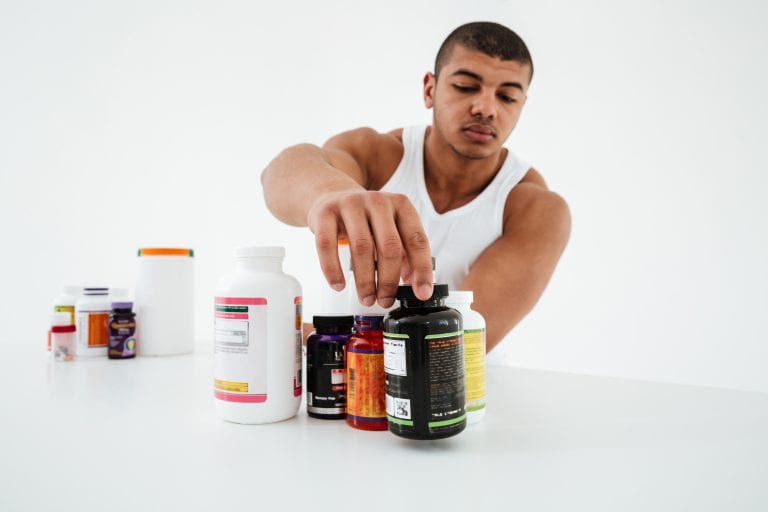
You've just had a pre-workout shake and suddenly you feel a strange tingling sensation in your face, hands, or arms. Don't panic! That's just beta-alanine doing its thing. But what exactly does this supplement do, and is it really for you if you go to the gym a couple of times a week or go for a nice run in the evening?
What does beta-alanine do in your body?
Beta-alanine is a substance that your body does not produce itself, but obtains through food. Your body uses it as a building block to produce carnosine. Carnosine is found in your muscles and helps you to keep going for longer before they become acidic and tired.
It works like a store that you slowly build up in your muscles. You only get small amounts of beta-alanine from normal food. Enough to build a basic supply of carnosine, but not enough to really maximise that supply. Beta-alanine is mainly found in meat and fish, and to a lesser extent in eggs and dairy. If you eat vegetarian? Then you still get some beta-alanine from eggs and dairy, meaning your carnosine levels are lower than in meat-eaters, but not as low as in vegans. If you eat vegan? Then you get no beta-alanine from your diet at all. As a result, vegans have the lowest natural carnosine levels in their muscles.
Research shows that vegetarians have, on average, 26% lower carnosine levels compared with meat-eaters (Blancquaert et al., 2018, https://pubmed.ncbi.nlm.nih.gov/29569535/This does not mean that vegetarians or vegans will get lactic acid quicker or perform worse. It simply means you have slightly less buffer during extremely intensive efforts. Many vegetarian and vegan athletes perform excellently without beta-alanine supplements. However, vegetarians and vegans may potentially experience a greater effect from beta-alanine supplementation because they start from a lower baseline. The good news: with consistent supplementation, vegetarians and vegans catch up, and after approximately 4-6 weeks, their carnosine levels are comparable to those of meat-eaters who don't take supplements.
With beta-alanine supplements, you get far greater amounts (3-6 grams per day, versus a few hundred milligrams through diet), allowing you to significantly build up your carnosine stores in your muscles. Higher than what you would achieve through diet alone, regardless of whether you eat meat or not.
But what does carnosine buffering do? Imagine you're in the middle of your last set of squats or the final miles of your run. Your muscles start to burn. This happens because during intense exercise, your muscles produce lactic acid, which increases acidity. Carnosine captures that acid and allows your muscles to keep going a little longer.
Beta-alanine is particularly helpful for intensive efforts lasting between 60 seconds and 10 minutes. By this, I don't mean your training session only lasts 10 minutes, but rather those specific moments when you're working really hard. A set of 12 squats might take 45 seconds, a round of intervals 3 minutes. During a one-hour training session, you'll have multiple of those moments, and that's where beta-alanine can make a difference.
That tingling sensation and how to use beta-alanine
Let's get straight to the elephant in the room: that tingling sensation. Shortly after taking beta-alanine, you often feel a prickly or tingling sensation, especially in your face, neck, or hands. This feeling is completely harmless and will go away on its own after half an hour to an hour. You can reduce it by taking smaller doses spread throughout the day.
Beta-alanine doesn’t work immediately like caffeine. It doesn't matter too much when you take it. The important thing is to be consistent every day to build up that supply in your muscles.
For optimal results, use a loading phase and a maintenance phase. During the loading phase, take 4-6 grams per day for 4-6 weeks, spread throughout the day. You'll notice an effect after about 2 to 4 weeks, but for optimal building, maintain this for at least 4 weeks. Afterwards, you can switch to a maintenance phase with a lower dosage of 1.5-3 grams per day to keep your carnosine levels stable. This prevents you from using unnecessary supplements and saves you money.
You can find beta-alanine as a loose powder, in capsules, or in pre-workout drinks. Powder is cheaper and allows you to determine your own dosage. Capsules are convenient on the go. Pre-workouts often also contain caffeine for a combined effect. Good news for vegetarians and vegans: although beta-alanine naturally only occurs in animal products, the supplements are synthetically produced in a lab. The end product is therefore plant-based and suitable for a vegan diet.
Beta-alanine supplements appear safe for short-term use of up to 24 weeks at recommended dosages (Decroix et al., 2019)., https://www.ncbi.nlm.nih.gov/pmc/articles/PMC6520041/However, longer-term safety studies (longer than one year) are not yet available (Trexler et al., 2015, https://www.ncbi.nlm.nih.gov/pmc/articles/PMC4501114/My advice: don't use beta-alanine continuously year-round, but in cycles. Think of periods of 8-12 weeks when you're training for a specific goal or competition, followed by a break of at least a few weeks. This gives your body a rest and keeps you within the safe limits of what has been scientifically researched. It's also wise not to take more than the recommended dosage. If you are pregnant or have medical conditions, check with your GP.
The reality: small profit
Research shows that beta-alanine can improve your performance during high-intensity exercise. A large study from 2012 found an average performance improvement of 2.85% (Hobson et al., 2012, https://pubmed.ncbi.nlm.nih.gov/22270875/, and a recent 2024 study confirms this effect, particularly during efforts of 4-10 minutes (Georgiou et al., 2024, https://pubmed.ncbi.nlm.nih.gov/39032921/That doesn't sound spectacular, and it isn't. It's a measurable improvement in scientific studies, but for the average recreational athlete, this difference is so small that you often don't consciously feel it in practice. Unless you are meticulously tracking your times or repetitions, you'll probably notice little difference.
When does it actually become relevant? For athletes competing in events where every second counts and efforts lasting between 1 and 10 minutes are crucial: rowers, middle-distance swimmers, runners looking to improve their 800- or 1500-metre times, or CrossFit athletes. For them, 2-3% can make the difference between winning and losing, or between setting a new personal best or just missing out.
My personal conviction: basics first
I'm quite reserved about beta-alanine for recreational athletes. Not because it doesn't work, but because lots of people overlook the fundamentals while taking supplements.
The real priorities? Enough protein spread throughout the day, plenty of fruits and vegetables, good carbohydrates at the right times, and simply eating enough. Additionally: eat enough before your training, have something with protein and carbohydrates after your training, and drink sufficient water.
I see it often: someone asks about supplements, but actually eats too little and doesn't know what to eat before or after their training. This is particularly true for vegetarians and especially vegans: first, make sure you get enough protein through legumes, tofu, and nuts. Look at your iron, vitamin B12, and omega-3. Those are the real priorities. Do you want to do something about your carnosine levels without supplements? Intensive training itself can increase your muscle carnosine, even in vegetarians. Additionally, while food does not contain carnosine, it does contain histidine, the other building block amino acid for carnosine, which is abundant in legumes, grains, and nuts. Although this effect will be modest compared to supplementation.
Beta-alanine only comes into play once that foundation is in place. If you eat structurally well, sleep well, train consistently, *and* notice you're really hitting your limits. And even then, I remain realistic: that tingling sensation, the daily intake, the fact that it takes weeks. It feels like a hassle for an improvement you'll probably only see if you meticulously track your performance.
Finally
Beta-alanine has its place, but that's with athletes who already have a solid foundation and for whom every second or repetition counts. For most recreational athletes, there are better places to focus. A good breakfast, sufficient protein, a good post-workout meal, and staying hydrated. These are the things that really make a difference.
See supplements as the tip of the iceberg. They might make that final bit of difference, but only if the rest of that iceberg, i.e. your training, your nutrition, your recovery, is already firmly in place. Start there, and who knows, you might reach a point where beta-alanine becomes a logical next step. But until then: eat well, train hard, and enjoy your sport. Because ultimately, that's what it's all about.
Get more out of every workout
Discuss your situation during a personal initial consultation.