
Knowing what you really eat: why keeping a food diary is worth it
Published: 6 October 2026
Last updated: 6 October 2026
Reading time: 6-7 minutes
Categories General
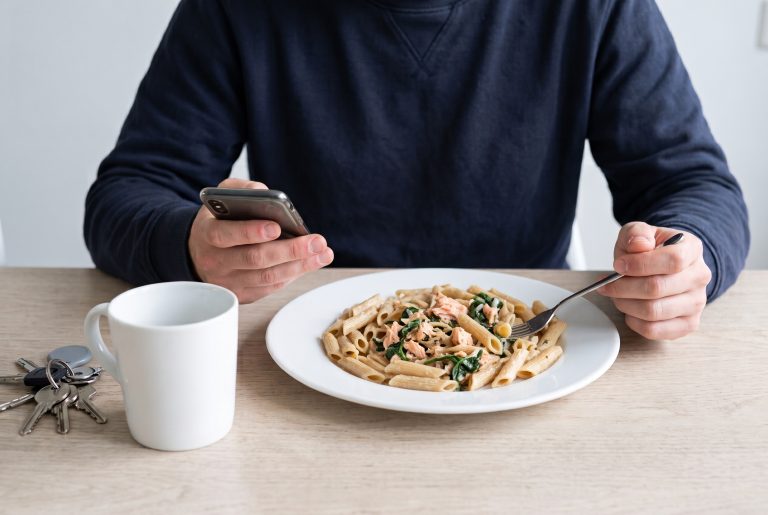
This blog is part 2 of the series ‘From feeling to control’.
In part 1 of this series (https://twindo-sportvoedingsadvies.nl/voeding-aanpassen-aan-training/) you read why your diet doesn’t have to be the same every day. On a heavy training day, you need considerably more carbohydrates than on a rest day, whilst your protein intake remains the same. But knowing what you need is not quite the same as knowing what you’re actually consuming.
Most athletes think they have a rough idea. In reality, they’re often way off the mark. That’s why keeping a food diary is one of the most valuable habits you can adopt as an athlete. Many athletes are put off by the idea because they think it takes a lot of time. It’s not as bad as you might think, and it’ll benefit you more than you expect.
What you think you’re eating and what you’re actually eating
It may sound strange, but we’re not very good at assessing our own diet. This also applies to athletes who are consciously mindful of their diet. An overview of studies conducted amongst athletes (https://doi.org/10.3390/nu9121313) showed that the energy intake reported by the athletes themselves was, on average, 19 per cent lower than what they actually consumed, according to accurate measurements. With a daily energy intake of 2,800 kilocalories, that amounts to well over 500 kilocalories: roughly the equivalent of a full meal that has gone unaccounted for.
Part of that difference is simply down to things being forgotten. The handful of nuts you have as a snack, the oil in the pan, the sports drink or gel during your workout, the recovery shake afterwards, the biscuit with your coffee and the nibble whilst cooking. Taken individually, they seem like minor details, but added up, they make a big difference.
If it’s difficult even for athletes who make a point of writing down what they eat, that says a lot about how unreliable an estimate based on gut feeling is.
To measure is to know
Nutritional advice tells you what you need. A food diary shows you what you’ve actually eaten. It’s only when you compare the two that you can see where the difference lies and what you can change.
Suppose you feel listless every Thursday during your interval training. Without a diary, you’ll look for the cause in your training, your sleep or your motivation. With a diary, you might realise that your lunch on Thursdays is always on the small side, because you’re rushing from one appointment to the next that day. Then you’ll know exactly where you need to make a change, and you won’t have to guess.
In Part 1, you saw just how significant the differences can be from one training day to the next. A food diary will show whether your diet actually reflects those differences, or whether, in practice, you end up eating more or less the same thing every day.
How much time does keeping a food diary actually take?
In an American study (https://pmc.ncbi.nlm.nih.gov/articles/PMC6647027/) tracked how much time participants in an online weight-loss programme spent digitally recording their food intake. In the first month, this averaged 23 minutes a day; by the sixth month, it had fallen to around 15 minutes. Recording food intake therefore becomes quicker and quicker as it becomes a habit.
It was also striking that it wasn’t the time of day that made the difference, but consistency. Those who logged their meals more frequently each day achieved better results. This ties in with what I recommend myself: log your meals straight after eating, in just a few taps, rather than having to piece your whole day together in the evening. It takes less time that way, and you’re less likely to forget anything.
What’s more, you often eat the same breakfasts and lunches. You’ll have them entered into the system after just a few times. You spend most of your time on it at the start, when everything is still new.
You don’t have to be perfect
Many athletes give up because they think every gram has to be spot on. It doesn’t have to be. A recent study of over 5,000 users of a nutrition app (https://doi.org/10.2196/98144) showed that consistency is more important than perfection. That study focused on weight loss, and the participants who recorded their data almost every day achieved the best results. However, even those who only recorded their data a few days a week clearly benefited. Missing a day does not negate the benefits.
My advice to athletes is therefore: it’s better to record your intake roughly every day than to be precise only now and then. A diary that’s 80 per cent accurate still gives you far more insight than no diary at all. An estimate using the ‘hand-measure’ method is perfectly fine; in my blog about calculating portion sizes without scales (https://twindo-sportvoedingsadvies.nl/portiegrootte-berekenen-zonder-weegschaal/) you can read how to do this. Pay particular attention to the things you’re most likely to forget: drinks, oil and anything you eat between meals.
If a product, portion or unit isn’t listed in your food diary, choose the closest alternative – for example, a similar product from a different brand, or the same type of bread or yoghurt in a slightly different variety. For a dish you can’t find anywhere, such as a meal in a restaurant or at a friend’s house, you can also ask an AI assistant to provide an estimate. Describe as specifically as possible what was on your plate and roughly how much, then enter the result into your diary. Bear in mind, however, that such an estimate is just an approximation and can sometimes be quite off the mark. You should therefore check whether the figure sounds reasonable given what you’ve eaten. A reasonable estimate is always better than a blank space in your diary.
A measurement period, not a lifelong obligation
You don’t need to keep a food diary for the rest of your life. Think of it as a trial period. After a few weeks of consistent recording, you’ll have a much better understanding of your own eating habits. You’ll have a rough idea of how many carbohydrates and how much protein are in your regular meals, and where your gaps lie.
You can then switch back to recording at regular intervals, for example in the run-up to a competition, if you change your training programme, or if you notice that your performance is plateauing.
Register without any hassle
Because tracking only works if it’s easy, I’ve designed the Food Diary in TWINDO One so that it takes just a few taps. It uses the NEVO database – the official Dutch food composition table – so you can find the products you actually buy in Dutch supermarkets. The Food Diary is included in the app from the Check subscription onwards. This way, your daily recommendations and what you’ve actually eaten are all in one place.
Is a food diary suitable for everyone?
Not always. Do you have a complicated relationship with food, or do you find that keeping track of what you eat makes you feel anxious or compulsive? If so, keeping a food diary isn’t the right step, and you’d be better off speaking to your GP or a specialist dietitian first. For most athletes, it actually works the other way round: it replaces doubt with clarity.
So what now?
After a few weeks of keeping a food diary, you’ll have something most athletes don’t: an accurate picture of what you eat. But data alone doesn’t change anything. The difference only comes when you do something with it: recognise patterns, make the right adjustments and see what that achieves. You can read about how to turn insight into results in part 3 of this series.
From feeling to grip
Part 1: Why your diet shouldn’t be the same every day (https://twindo-sportvoedingsadvies.nl/voeding-aanpassen-aan-training/)
Part 2: Knowing what you’re actually eating
Part 3: From insight to results (coming soon)
Try TWINDO One free for 10 days
The answer to your question: how much should I eat today to perform at my best?