
How the world of sports nutrition advice and coaching has changed
Published: 12 September 2026
Last updated: 12 September 2026
Reading time: 8-10 minutes
Categories General
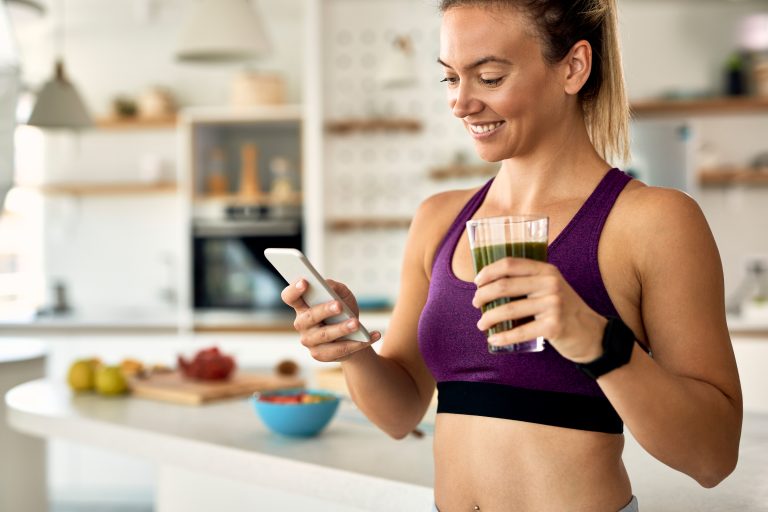
In my own practice, I’ve noticed a decline in demand for traditional sports nutrition advice. Athletes who focus on their performance on a daily basis find less and less value in a programme where they only sit down again weeks later to discuss how things went. That now feels outdated.
This hasn’t come out of the blue. The traditional approach has always followed a set pattern: an initial consultation, a personalised nutrition plan tailored to the training and competition schedule, and then follow-up consultations. That first follow-up can take place after just a few weeks, but between consultations there is usually little or no contact, and therefore little insight into what is actually happening on a day-to-day basis. For athletes with a less intensive schedule or a one-off enquiry, this model still works perfectly well, but for those who want to make continuous adjustments, it falls short.
What athletes actually want these days boils down to two things: advice that adapts to the training week rather than remaining the same for months on end, and advice that looks ahead to what is needed, rather than looking back at what has already been eaten. These two shifts explain why sports nutrition advice looks different today than it did ten years ago, and they are precisely the reason why I built TWINDO One.
What lies behind the shift
A number of developments lie at the root of this change.
Athletes are training more intelligently and want their diet to keep pace. Whereas nutrition used to be treated as a separate issue from training planning, it is now increasingly seen as part of the same whole. This calls for advice that adapts in line with the training week, rather than a plan that is only adjusted at the next scheduled consultation.
Busy lives leave little room for fixed appointments. For many athletes, fitting in a face-to-face session at a fixed time each week is difficult to manage alongside work, family and their training schedule. Support that takes just a few minutes a day, at a time of the athlete’s choosing, is simply a better fit.
Data makes food tangible. Athletes have become accustomed to tracking their metrics: heart rate, sleep, recovery, training load. Everything is measured. Nutrition has long been the exception to this. A digital food diary is changing that: instead of guessing afterwards what has been eaten, you can see straight away how the day went and where adjustments are needed.
The coach can genuinely help more athletes in the same amount of time. Digital tools take care of the administrative side of coaching: keeping records, sending reminders and maintaining an overview. That gives me, as a coach, more time to focus on what really matters: interpreting, making adjustments and explaining why something works.
The role of the sports nutrition coach today
The idea that “you just draw up a plan and you’re done” hasn’t been true for a long time. These days, the work of a sports nutrition coach consists of a number of ongoing elements:
- Monitoring – monitoring how nutrition, training and recovery interact, not just once a quarter, but on an ongoing basis.
- Looking ahead – determining what an athlete needs before a training session, a rest day or a competition day, rather than trying to work out afterwards what they have eaten.
- Go with the flow – advice that changes as soon as the training week, the goal or the workload changes, rather than a schedule that remains unchanged for weeks on end.
- Explain – not just telling an athlete what to eat, but also why, so that they can make their own choices in the long run.
This shift does not mean that the profession has become less personal. Quite the opposite, in fact: as administrative tasks are taken over by tools, there is more time left for the conversations that really matter.
What this means for the athlete
For the athlete themselves, this shift brings a number of tangible benefits.
Support is provided more accessible: no travelling time, no fixed appointment times, advice that fits in with your daily routine. It also becomes more affordable, because as a coach I can work more efficiently without compromising on quality. And it’s becoming more personal than it seems at first glance. Precisely because I have a daily insight into what’s going on, rather than just a snapshot every few weeks.
At the same time, this requires something from the athlete: a willingness to keep track of what they eat, and the confidence and awareness that an app is no substitute for a coach, but a way to help that coach do their job more effectively.
Where generic fitness and nutrition apps fall short
There are now plenty of apps that let you track calories and macros. Some of the best-known ones even do much more than just nutrition: logging workouts, syncing with a smartwatch or Fitbit, importing recipes, a social feed with friends and challenges, and now also AI-driven coaching and insights. That’s fine for general use. But for athletes who are serious about their performance, these kinds of all-rounders fall short in a number of areas.
They do a lot of things, but they don’t do this one thing well. The best-known apps aim to be versatile: nutrition, workouts, weight, social motivation, medication tracking. Sports nutrition receives just as much attention as any other feature. There’s no sport-specific detail, no account is taken of training schedules that may change on a day-to-day basis – just a general calorie and macro target for everyone. An athlete who wants to know exactly what a training day requires won’t get very far with that.
They look back, whereas an athlete needs to be able to look ahead. Most well-known apps are based on logging: you enter what you’ve already eaten, and the app works out afterwards where you stood. It’s useful for reflection, but an athlete already has that question in the morning: how many carbohydrates, protein, fat and fluids do I need today, given my training session, rest day or competition? That’s a completely different approach: planning ahead based on the day ahead, rather than adding things up afterwards to see what’s happened.
They aren’t keeping up with the training. A fixed daily target for calories or macros does not take into account the difference between a heavy training day and a rest day, the intensity or duration of that day’s training, or the difference between a competition week and a recovery training week. For an athlete, requirements vary from one training session to the next and from one day to the next. Advice that remains the same every day is just as unhelpful as a plan that isn’t adjusted for months on end.
They are designed for weight loss, not for sporting performance. Most popular apps stem from the diet and fitness market, with a focus on calorie restriction or general fitness goals. For an athlete who wants to recover, periodise their training around competitions, or has sport-specific needs, this approach isn’t suitable. Combat sports, long-distance running, team sports with varying training loads throughout the week – these are all situations that generic apps are ill-equipped to handle, yet it is precisely in these areas that precision makes all the difference.
They ask for a lot before they give anything in return. Filling in detailed profiles, keeping a log for weeks on end, sometimes even buying a wearable. Only then does useful advice follow. Some apps even add the calories burned during a workout to your daily target, based on an estimate from a wearable device that often turns out to be too high. For athletes who simply want to know what they need today, that hurdle and that margin of error are unnecessarily high.
The underlying data cannot always be trusted. Many international apps use crowdsourced food databases: users add products themselves, with varying degrees of accuracy. For an athlete who plans their day based on this information, it makes a real difference.
There’s no one behind it. An algorithm – or even an AI coach that provides standardised advice – can identify patterns, but it cannot ask why an athlete has eaten less for three days running, or assess whether a dip in energy is down to diet, sleep or something else entirely. It is precisely that conversation that transforms nutritional advice into genuine guidance.
As a result, many athletes stop using these apps after a few weeks: the data piles up, but nothing is done with it.
How TWINDO One adapts and looks ahead
This development, and the gaps left by generic nutrition and fitness apps, is precisely why I built TWINDO One as it is today. It’s based on those two core principles: moving with you and looking ahead.
Fill in your training schedule and competition plan, and the app will calculate how many carbohydrates, protein, fat and fluids you need for each training, rest or competition day, including the timing around your training session. That’s planning ahead: knowing what’s needed before the day begins, rather than working it out retrospectively. If your weight, goal or training week changes, the advice adjusts immediately. That’s adapting: no fixed schedule, but advice that changes as soon as the situation does. You don’t need to keep a log for weeks on end or use a wearable to get started: simply filling in your training schedule is enough to get advice you can use straight away.
What’s more, this advice is sport-specific, even for sports that many apps overlook, such as martial arts. And it’s based on the official, RIVM-validated NEVO nutrition database rather than crowdsourced data. Whereas a broad, all-rounder app attempts to combine nutrition, workouts, social features and general fitness goals in a single app, TWINDO One deliberately focuses on just one thing: personalised coaching with sports nutrition advice that is precisely tailored to that day’s training session.
If you want more than just daily advice, you can build that up. In TWINDO Check This is accompanied by a food diary, a daily step counter and a report with personalised feedback every four weeks. TWINDO Progress It also includes real-time insights in the dashboard, a comprehensive PDF report on meal optimisation, a personal consultation every four weeks and direct contact via WhatsApp. This allows every athlete to choose what they need right now, without having to opt for the most comprehensive programme straight away.
The coach behind the app
What sets TWINDO One apart is not just the calculation, but also who is watching.
Behind TWINDO One is not an algorithm from a tech start-up, but me: a sports nutrition coach with a BGN-accredited qualification in Sports Nutrition and six years’ practical experience. And, just as importantly, someone who competes at a high level myself: I’ve run twelve marathons and two ultra-marathons, hold a black belt in aikido (3rd dan), do strength training and practise Brazilian Jiu-Jitsu. This means that my advice on recovery, timing or training load isn’t just based on theory, but on experience of what the body actually goes through.
I do more than just check figures. With TWINDO Check, I provide personalised feedback on progress every four weeks; with TWINDO Progress, this is supplemented by a regular consultation, during which we discuss obstacles, I adjust my advice and there’s scope for motivation: the sort of support that focuses on lasting behavioural change, not on a plan that’s drawn up once and then left to its own devices. It is precisely that conversation – why something isn’t working, what lies behind a disappointing week, what needs to change structurally – that no app can offer on its own.
Are you curious to find out what day-to-day nutritional guidance looks like in practice? Try TWINDO One free for 10 days and see for yourself how advice that adapts to your needs works.
Get more out of every workout
Discuss your situation during a personal initial consultation.