
The world of sports drinks: which choice is right for you?
Published: 22 September 2025
Last updated: 22 September 2025
Reading time: 5-6 minutes
Categories Hydration
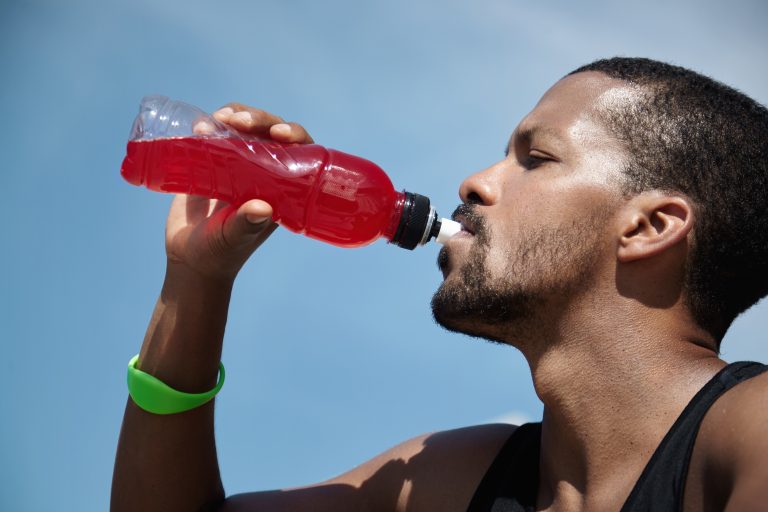
All those bottles full of coloured liquids on the supermarket sports shelf, and the vast array of sports nutrition webshops can be quite intimidating. Over the years, I've experimented with various sports drinks and experienced first-hand the differences between hypotonic, isotonic, and hypertonic. What started as a search for ‘something better than water’ for longer training sessions, ended up being a fascinating journey of discovery where I learned how each type of sports drink has its own time and place.
These experiences have helped me understand when which sports drink works best for different situations. I would like to share that insight with you.
Why a sports drink at all?
Water is, naturally, the basis of everything. Our bodies are largely made up of water, and when we exercise, we lose not only fluid through sweat but also important minerals and electrolytes like sodium, potassium and chloride. Sweat consists of water and electrolytes, such as salt, so during exertion your body gradually depletes its stores of these substances. For short periods of exertion up to an hour, water is perfectly adequate, but for longer and more intense training sessions, a sports drink comes into play.
During my first marathon (in the past I've run 12 marathons, 2 ultra marathons, and many half marathons), I only occasionally drank a cup of the energy drink at the aid stations, which in retrospect turned out to be too little to sustain me throughout the entire marathon. After kilometre thirty, my muscles started to protest, not only from fatigue but also due to a disruption of my electrolyte balance. When you exercise intensely or sweat, you lose a lot of electrolytes. That's why it's important to maintain these during and after sport. Therefore, a sports drink ensures that your body not only replenishes lost fluids but also the essential minerals needed for proper muscle function and fluid balance.
In addition, most sports drinks also provide energy in the form of carbohydrates. During endurance activities, the body primarily relies on its fat reserves, which the average Dutch person can sustain themselves on for three days! However, your body can extract energy from carbohydrates faster than from fat. For efforts longer than an hour, this quicker energy supply can make the difference between a strong finish and hitting the wall.
The three types of sports drinks deciphered
The secret lies in the osmolarity, a complicated word for the concentration of particles in the fluid. This determines how quickly your body absorbs and processes the drink. There are three main categories, and each has its own time and place.
Hypotonic sports drinks are the quick thirst quenchers among sports drinks. A hypotonic drink contains a maximum of 4 grams of carbohydrates per 100ml. Due to the low concentration of dissolved substances, your body absorbs these drinks extremely quickly. Hypotonic drinks are ideal on hot days, after intensive training when rapid rehydration is more important than energy replenishment, or simply as a standard choice for regular training sessions. The disadvantage is that you get little energy from these drinks, so they are less suitable for long training sessions. For my current sporting activities, this has become my standard sports drink.
Isotonic sports drinks the versatile all-rounders that most athletes come into contact with. An isotonic sports drink has a particle concentration (osmolarity) roughly equal to that of body fluids. An isotonic sports drink contains an average of 4-8 grams of carbohydrates per 100ml. These drinks offer the perfect balance between hydration and energy supply. During my longer runs, I swore by isotonic drinks because they kept my fluid balance in check and provided enough fuel to keep going.
Hypertone sports drinks Energy bombs, a hypertonic drink, contain more than 8 grams of carbohydrates per 100ml. These drinks are particularly useful before and after training, but less suitable during exertion as they are absorbed more slowly and can cause stomach upset. I made the mistake of taking a hypertonic drink during a long run, which resulted in bloating and discomfort that lasted for the rest of the run.
When do you choose which sports drink?
The timing and intensity of your training largely determine which sports drink is best suited to you. For efforts shorter than an hour, water is usually sufficient, but as soon as you start exercising for longer and more intensely, the choice becomes more interesting.
For short, intensive workouts or when it's very hot and you sweat a lot, a hypotonic drink is ideal. This type of sports drink can also offer a solution when your stomach reacts strongly to gels. Personally, I also liked using hypotonic drinks during recovery runs or when I knew I was prone to stomach upset.
For most endurance athletes, isotonic drinks are the gold standard. If you're exercising for longer than an hour, it's best to replenish both your fluids and energy. An isotonic drink is suitable for this, as fluids, carbohydrates, and electrolytes are absorbed into the blood simultaneously. You'll therefore almost always see isotonic drinks at the aid stations during marathons and long runs.
Hypertone drinks are best saved for specific moments. A hypertonic sports drink is less suitable for hydration. They can even have a slightly dehydrating effect at first. I sometimes use them well before a competition to top up my glycogen stores, or immediately after a very heavy training session for a quick energy boost.
Practical tips and ingredients
Modern sports drinks are not just sugar water with a fancy label. The best sports drinks contain a thoughtful mix of different sugars, usually glucose and fructose in a specific ratio.
For an effort of 1 to 2 hours, 30g of carbohydrates per hour is sufficient. For an effort of 2 to 3 hours (or longer), the carbohydrate requirement increases to 60g per hour. For elite athletes, this can even rise to 90 grams per hour, with a mix of 60 grams of glucose and 30 grams of fructose being optimal. However, this requires specific training of your digestive system to process such quantities without issues. For more information on carbohydrates during sporting exertion, see my blog: https://twindo-sportvoedingsadvies.nl/koolhydraten-voor-sporters/
Sodium is the main electrolyte in sports drinks. Sodium improves water absorption by being absorbed from the intestine along with glucose, which draws water with it. It also creates a feeling of thirst, encouraging you to drink more. It also helps to retain fluid, preventing you from urinating it out immediately as you would with plain water.
Making your own sports drink is surprisingly simple: water, a pinch of salt, and some sugar or honey are all you need for a basic isotonic drink. However, for many people, buying a standard sports drink product remains more practical, especially because these products already contain the correct proportions and don't require the hassle of measuring and mixing.
The practice: my personal experiences
Over the years, I've learned that every athlete has their own preferences, and that experimenting during training sessions is essential. What works perfectly for my training partners can lead to stomach upset for me. I've found that I'm sensitive to overly sweet sports drinks, and that diluted isotonic drinks work best for me during long efforts. Currently, Waterfuze...https://waterfuze.commy go-to hypotonic sports drink due to its balanced composition and great taste, and because I don't train for longer than 1 to 1.5 hours, I don't need extra carbohydrates.
An important lesson I've learned: never try anything new during a competition. I once tried a new energy drink during an important running race, which resulted in nausea. Since then, I've only used proven sports drinks during competitions and training, unless I'm changing brands, in which case I test it during training first.
Temperature also makes a difference. Cold drinks between 10-15 degrees Celsius are usually better tolerated and absorbed faster than lukewarm drinks.
The future of sports drinks is evolving towards more natural ingredients and personalised formulations. We are also seeing more focus on sustainability and packaging with less environmental impact.
Ultimately, choosing the right sports drink comes down to understanding your own body and training needs. Start conservatively with isotonic drinks for workouts longer than an hour, experiment with different brands and flavours during training sessions, and gradually build up your experience. The perfect sports drink doesn't exist, but the sports drink that best suits you and your sport certainly does.
Get more out of every workout
Discuss your situation during a personal initial consultation.