
Too little energy, too many ambitions: recognising RED-S before it's too late
Published: 12 November 2025
Last updated: 12 November 2025
Reading time: 12-13 minutes
Categories General
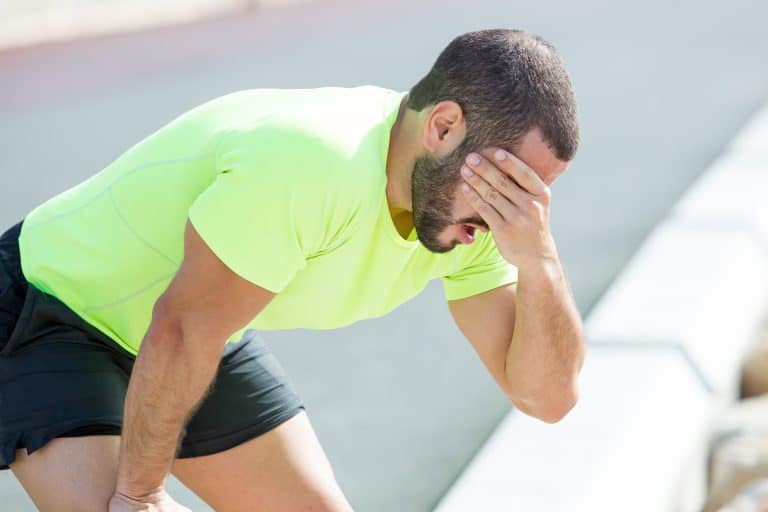
As a sports nutrition coach, I occasionally speak to athletes who are frustrated because their performance is lagging, despite all the training and discipline. They are doing everything “right” according to the rules: training hard, eating “healthily,” missing very few sessions. Yet, they aren't getting any better. In fact, they're getting worse. Fatigue sets in, injuries pile up, and sometimes menstruation disappears entirely. That's when I often think: there's more going on here than just an incorrect training plan. This could be RED-S, a syndrome that surprisingly affects many recreational athletes, but which still too few people know about.
What exactly is RED-S?
RED-S stands for Relative Energy Deficiency in Sport. While the name sounds technical, the concept is actually simple. Your body needs energy for three major areas: its basic bodily processes such as breathing and cell renewal, your daily activities, and your sport. If you consistently don't consume enough energy for these, your body goes into a kind of emergency mode. It switches off all non-essential processes to conserve energy.
That might sound convenient for those wanting to lose weight, but it is downright dangerous. RED-S is not a matter of eating too little for a few days (source: https://www.sciencedirect.com/science/article/pii/S2772696724000346This is a chronic deficit where your body uses more energy than it takes in, month after month. The consequences affect not just one aspect of your health, but multiple organ systems simultaneously: hormones, bones, the immune system, muscles, and even your mental health.
Until 2014, the term “Female Athlete Triad” was used because elite female athletes, in particular, presented with disturbed menstruation, low bone density, and eating disorders. However, the International Olympic Committee discovered that the problem is broader. It also affects men, recreational athletes, and manifests in many more ways than just those three symptoms. Hence the new name RED-S.
Een energietekort bij sporters kan op verschillende manieren ontstaan. Hieronder een aantal veelvoorkomende oorzaken: * **Onvoldoende calorie-inname:** De meest voor de hand liggende oorzaak is simpelweg dat de sporter te weinig calorieën consumeert om de energie die hij of zij verbruikt tijdens training en wedstrijden aan te vullen. Dit kan komen door: * **Crashdiëten of restrictieve eetpatronen:** Sporten met de intentie om snel gewicht te verliezen kan leiden tot een te lage calorie-inname. * **Vergeetachtigheid of slechte planning:** Niet consequent genoeg eten gedurende de dag, waardoor er te weinig brandstof beschikbaar is. * **Angst voor gewichtstoename:** In bepaalde sporten met veel aandacht voor lichaamsgewicht, kan de angst om aan te komen leiden tot het beperken van voedselinname. * **Te hoge trainingsbelasting:** Wanneer de trainingsintensiteit en/of het trainingsvolume te hoog is in verhouding tot de herstelmogelijkheden en de voeding, kan het lichaam de energiebehoefte niet meer bijbenen. Dit kan leiden tot: * **Overreaching of overtraining:** Het lichaam raakt uitgeput en heeft onvoldoende tijd om te herstellen tussen trainingen. * **Onvoldoende rustdagen:** Het negeren van de noodzaak van rust en herstel. * **Verstoorde energie-omsætning:** Soms kan een energietekort ontstaan door problemen met hoe het lichaam energie opneemt of gebruikt, zelfs als de calorie-inname en trainingsbelasting op het eerste gezicht in balans lijken. Dit kan gerelateerd zijn aan: * **Slechte spijsvertering of opname van voedingsstoffen:** Problemen met de darmen kunnen ervoor zorgen dat voedingsstoffen niet optimaal worden opgenomen. * **Hormonale disbalans:** Bepaalde hormonale aandoeningen of veranderingen kunnen de energiehuishouding beïnvloeden. * **Slaapgebrek:** Onvoldoende slaap beïnvloedt de herstelprocessen en hormonale regulatie, wat kan bijdragen aan een energietekort. * **Ziekte of blessure:** Tijdens periodes van ziekte of blessures heeft het lichaam vaak meer energie nodig voor herstel, terwijl de voedingsinname soms juist afneemt. * **Omgevingsfactoren:** Extreme hitte of kou kan de energiebehoefte van het lichaam verhogen. Het is belangrijk op te merken dat een chronisch energietekort bij sporters kan leiden tot serieuze gezondheidsproblemen en prestatieverlies. Dit wordt ook wel de "Female Athlete Triad" genoemd (energiegebrek, verstoorde menstruatie en botontkalking) bij vrouwen, hoewel vergelijkbare symptomen ook bij mannen kunnen voorkomen. Indien een sporter vermoedt een energietekort te hebben, is het raadzaam om advies in te winnen bij een sportdiëtist of sportarts.
You'd think athletes who are so mindful of their bodies and performance would automatically eat enough. But reality is more stubborn. RED-S often arises not from an eating disorder or deliberate starvation, but from a miscalculation of what the body needs.
Many amateur athletes are seeing their training volume increase significantly. From twice a week to five times. Or they are preparing for a marathon, a triathlon, or taking up a new sport. They are increasing their training load, but not adjusting their diet accordingly. Sometimes they even eat less because they also want to lose weight or live “healthier.” Suddenly, you are in a situation where you are consistently consuming too little energy for what your body needs. Day in, day out.
Sports where weight is a factor carry an increased risk. Think of cyclists who want to be lighter for climbs, runners who believe that every kilo lost translates into a gain in speed, or judokas who have to weigh in before a competition. But dancers, gymnasts, rowers and triathletes also regularly find themselves in the risk zone. A study of professional female footballers showed that 22% of them had an increased risk of RED-S, with 29% exhibiting at least one primary indicator of the syndrome (source: https://onlinelibrary.wiley.com/doi/full/10.1002/ejsc.12129).
What's interesting is that RED-S doesn't just occur in elite athletes. Fanatical amateurs and recreational athletes can also be affected. In elite athletes, it's harder to recognise because they often look “healthy” and athletic. The problem remains under the radar until symptoms start to build up.
Signs you shouldn't ignore
RED-S creeps in. The symptoms are diverse and often dismissed as normal fatigue or “part and parcel” of serious training. But there are clear warning signs you need to recognise.
For women, an irregular cycle or the complete absence of menstruation is the most characteristic sign. This is often dismissed as “convenient” or as something that will resolve itself. However, it is a serious indicator that your hormonal balance is disrupted. Your body shuts down reproductive functions because it doesn't have enough energy to support those processes. Low oestrogen levels can also lead to premature hardening of the arteries in young female athletes, a form of cardiovascular damage that normally only occurs later in life (source: https://www.nice-info.be/nutrinews/syndroom-red-s-relatief-energietekort-de-sport).
In men, it is harder to recognise because the lack of menstruation as an indicator. However, male athletes can also suffer from hormonal imbalances. Cyclists with low energy availability regularly show reduced levels of the male sex hormone testosterone, abnormal growth hormones and increased stress hormones (source: https://academic.oup.com/edrv/article/45/5/676/7629683This manifests as a reduced libido, difficulty with muscle recovery, and chronic fatigue.
Other warning signs affecting both men and women include recurring injuries, especially stress fractures. Your bones become more brittle due to reduced bone density. Small cracks in your shin, foot, or hip that refuse to heal. A weakened immune system is also noticeable: you catch colds more often, recover more slowly from infections, and suffer more frequently from respiratory problems. Disappointing performances are another sign. You train hard, but your times get slower, you feel heavy, and your recovery takes an age.
Mentally, you'll notice it too. Irritability, low mood, concentration problems, and reduced motivation can all be signs of an energy deficit. The body conserves energy on all fronts, and that also means less “fuel” for your brain.
RED-S occurs when there is an energy deficiency.
RED-S is not a tick-box exercise where you have to meet a certain number of symptoms. It's about an accumulation of signals that together indicate an underlying energy deficit. The International Olympic Committee developed a new assessment method in 2023, the RED-S CAT2, where doctors collect and weigh primary and secondary indicators. https://pubmed.ncbi.nlm.nih.gov/37752002/).
Primary indicators are serious symptoms such as absent menstruation, stress fractures, or extreme unexplained fatigue despite adequate rest. Secondary indicators are less specific signs such as recurrent infections, reduced performance, or decreased muscle strength. The more indicators there are and the more severe they are, the greater the risk. A formal RED-S diagnosis can only be made by a sports physician, as distinguishing it from other conditions and its appropriate treatment require professional expertise (source: https://pubmed.ncbi.nlm.nih.gov/37752011/).
So it's not the case that you only have RED-S if you meet five or ten symptoms. One serious symptom can be enough for a diagnosis. Conversely, multiple mild symptoms can also indicate a problem that deserves attention.
Why accurate calculation doesn't work
You'd think you could simply calculate whether you're eating enough. Energy intake minus energy expenditure, and job done. But it's not that simple. Everyone has a different basal metabolic rate, a different activity level outside of sport, and burns calories differently during the same workout. What is enough for one person can be a deficit for another.
Furthermore, accurately measuring energy availability is practically impossible. You would need to know your lean body mass precisely, record every calorie consumed, and track your energy expenditure during all activities. For recreational athletes, this is not only difficult but also undesirable. You want to enjoy your sport, not sit at the table with a calculator.
We can indeed say that research shows that when you structurally have too little energy for your basic processes, after your training has been deducted, your body encounters problems. At a critically low level, important hormones that regulate your metabolism quickly decline and hormonal disruptions increase (source: https://www.fit.nl/red-sBut when that happens exactly, differs from person to person.
This is why it's far more practical to listen to your body's signals rather than chasing numbers. Do you constantly feel tired? Are your injuries recovering slowly? Is your period absent? Are your performances declining despite training? In that case, you may not be getting enough energy, regardless of what the figures say.
Treatment: restoring energy balance
The basis of RED-S treatment is simple but not easy: you need to eat more. Recent research confirms that increasing energy intake is essential (source: https://www.sciencedirect.com/science/article/pii/S2772696724000346and that this works even more effectively in combination with education and sometimes hormonal treatment.
For many athletes, this feels counter-intuitive. They want to lose weight or are afraid of gaining weight and performing slower. But the reality is that your body is in emergency mode and your performance is already deteriorating dramatically. Restoring your energy balance is not a luxury, but a necessity.
Concretely, this means that on heavy training days, you need to consume enough carbohydrates and protein to support your body. The precise amounts vary per person and sport, but as a guideline, athletes often need more than they think. On rest days, you can slightly reduce carbohydrates, but certainly not drastically. Fats are also crucial for your hormone balance. Eating too little fat can disrupt your hormone balance, in both men and women.
Besides eating more, you often also need to train less. This sounds like a nightmare for motivated athletes, but sometimes complete rest from sport is necessary to allow your body to recover. The IOC has developed a colour system to determine if and how an athlete can continue training. Green means full training is permitted, yellow requires increased alertness and adjustments, orange necessitates medical monitoring during limited exercise, and red means stopping exercise is necessary until recovery (source: https://www.fit.nl/red-sAthletes with severe symptoms such as stress fractures, eating disorders, or extreme hormonal abnormalities may sometimes have to stop for months before they can safely resume.
Treatment is multidisciplinary. You need a sports doctor, a nutritionist, and often a sports psychologist as well. The pressure to perform, the fear of weight gain, and guilt surrounding food require professional guidance. This is not a matter of “just pushing through” or “simply eating more.” RED-S has deep psychological and physical roots that take time and expertise to address.
Prevention starts with awareness
The good news is that RED-S is preventable. It starts with education. Athletes, trainers and coaches need to understand that more training doesn't automatically lead to better results if nutrition isn't scaled up accordingly. An intensive training period requires adapted nutrition, not a stricter diet.
Monitor your body. Pay attention to signals such as persistent fatigue, recurring injuries, and, in women, changes in the menstrual cycle. Don't weigh yourself daily to check for the smallest weight difference, but do keep track of how you feel, how you recover, and whether your performance is improving or stagnating.
Avoid strict diets and unnecessary food exclusions. As a recreational athlete, you will not benefit from extreme low-carb diets, intermittent fasting during heavy training periods, or cutting out entire food groups. Your body needs variety and sufficient energy to function and perform.
Incorporate recovery periods when planning your training schedule. Rest is not a weakness, but an essential part of your progress. Get enough sleep, take rest days seriously, and listen to signs of overtraining.
RED-S is a serious syndrome with far-reaching consequences for your health and performance. It is not a sign of weakness or failure, but a logical consequence of a chronic imbalance between energy intake and energy expenditure.
As a sports nutrition coach, I help athletes recognise the signs of RED-S. I can support you in restoring your nutritional balance, building healthy eating habits around your training, and finding the right amounts of energy your body needs. However, I am not a doctor. The medical aspects of RED-S, such as making a diagnosis, assessing hormonal abnormalities, bone density, or other health risks, fall outside my expertise and remit.
Do you recognise several of the signs described in this blog? If so, please contact a sports physician. They can carry out a thorough assessment, potentially request blood tests or other diagnostic tests, and draw up a treatment plan. Only after that can I, as part of a multidisciplinary team, help with the nutritional aspect of your recovery.
The message is clear: train smart, eat enough, rest adequately, and dare to seek professional help if you recognise the signs. Your body deserves that investment.
Get more out of every workout
Discuss your situation during a personal initial consultation.