
Hydration during sport: why water is your best friend
Published: 6 August 2025
Last updated: 2 September 2025
Reading time: 6-8 minutes
Categories Hydration
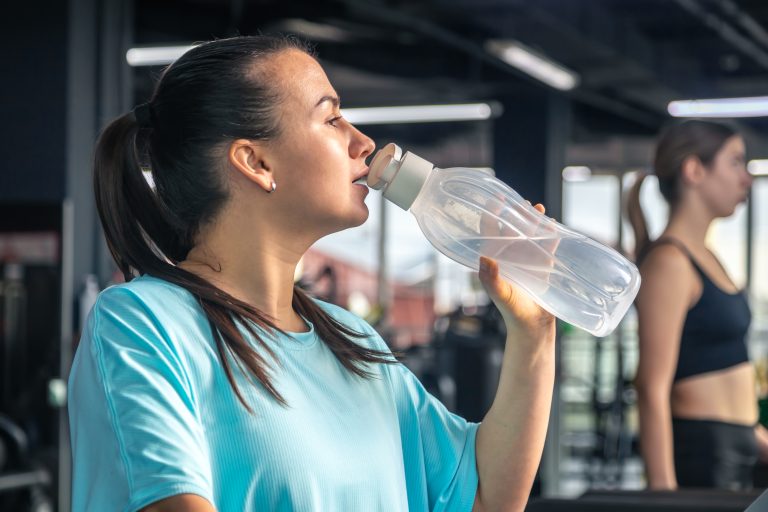
Water seems so obvious that many athletes hardly give it a second thought. Not until halfway through a training session, they suddenly get a headache, feel dizzy, or notice their performance suddenly plummeting. As a sports nutrition coach, I regularly see athletes who meticulously plan their nutrition but forget to take their hydration seriously.
That’s a missed opportunity, because proper hydration can make all the difference between a great workout and a gruelling session you have to grit your teeth and get through. A recent review from 2024 continues to confirm that dehydration of 2% or more of body weight leads to a progressive decline in athletic performance, thermoregulation and appetite (https://www.mdpi.com/2072-6643/16/11/1709).
What dehydration does to your body
Your body is made up of around 60% water, and that water plays a crucial role in virtually all bodily processes. During exercise, you lose fluid through sweating and breathing, and if you don’t replenish it, your performance will suffer.
You start to notice the first effects after just 2% of fluid loss: your concentration wanes, you feel tired and your body is less able to regulate its temperature. After 3–4% of fluid loss, your strength and endurance drop noticeably. Recent research from 2024 shows that athletes who believe they are dehydrated experience a 5.6% reduction in performance, even if their actual hydration status is the same as those who were told they were well hydrated (https://usecadence.com/blogs/science/effects-of-hydration-on-performance-and-athlete-hydration-strategies).
If you lose more than 5% of fluid, it becomes dangerous: your risk of heatstroke increases dramatically. The tricky thing is that thirst is a late warning sign. If you’re thirsty, you’re already dehydrated. That’s why it’s important to stay hydrated proactively, not reactively.
It is also interesting that dehydration causes your body temperature to rise. Water acts as a natural coolant through evaporation via sweating. When you are insufficiently hydrated, your core temperature rises faster, causing your body to work harder to stay cool. This explains why you feel more fatigued more quickly in warm weather if you are not well-hydrated.
Sweating is a complex process that involves much more than simply losing water. On average, an athlete loses between 0.5 and 3 litres of sweat per hour, depending on intensity, ambient temperature, humidity, and individual factors. Sweat is not only composed of water but also contains important electrolytes such as sodium (400-700mg per litre), potassium, magnesium, and chloride.
Sodium loss is particularly important because this electrolyte is crucial for muscle function and fluid balance. Research from 2022 shows that when athletes lose an average of 2.31% of their body weight through sweating, they perceive the exertion as significantly more strenuous. On a scale of 1 to 20 (where 20 is extremely strenuous), dehydrated athletes perceived the exertion as almost a full point more strenuous than well-hydrated athletes (https://www.mdpi.com/2077-0383/13/4/982).
The perfect hydration strategy for during sport
For your training, ensure good hydration throughout the day. Approximately 35ml per kilogram of body weight spread over the entire day. Two hours before your training, you can drink another 400-500ml of water, giving your body time to excrete excess fluid and allowing you to start your training well-hydrated.
For short training sessions (under 60-90 minutes), plain water is perfect. Drink small sips, around 150-200ml every 15-20 minutes. Don't force too much down at once, as this will only make you feel full and can lead to uncomfortable movements during sports.
For longer periods of exertion, it becomes more interesting. Then you don't just lose water, but also electrolytes such as sodium and potassium through sweating. A sports drink can then be useful, but be aware: many commercial sports drinks contain unnecessary additives and are more expensive than necessary.
An important aspect that is often overlooked is the temperature of your drink. Research indicates that lightly chilled drinks (10-15°C) are absorbed by the stomach more quickly than warm or ice-cold drinks. Furthermore, the cool temperature has an additional cooling effect on your body.
The timing of drinking is also crucial. Don't wait until you're thirsty. Start drinking small amounts early in your training. Your stomach can process approximately 200-300ml of fluid every 15-20 minutes, so take that into account in your hydration strategy.
Sports drinks: when to have them and when not to
Sports drinks have a right to exist, but not for everyone and not always. They are particularly useful for training sessions longer than 90 minutes, intensive training in high temperatures, if you are a heavy sweater, or during competitions where every percentage of performance counts.
For an hour-long gym session, a short run or a strength training session, sports drinks are usually overkill and, above all, an expensive marketing ploy. Ideally, a good sports drink should contain 6–8% grams of carbohydrates and 200–300mg of sodium per 250ml. This ensures optimal absorption in the intestines without causing stomach upset.
An interesting development is the use of different sugars in sports drinks. Drinks with a combination of glucose and fructose (in a 2:1 ratio) can deliver up to 90 grams of carbohydrates per hour, compared to 60 grams with glucose alone. This is particularly relevant for ultra-endurance athletes who are engaged in intense activity for more than 2.5 hours.
Recent research from 2024 also confirms that the carbonation of a drink has no effect on its hydrating properties, and that performance improvements of up to 10% have been observed in studies involving cold drinks compared with warmer ones (https://usecadence.com/blogs/science/effects-of-hydration-on-performance-and-athlete-hydration-strategies).
You can also easily make your own effective sports drinks. A proven recipe: 30-60 grams of sugar, a pinch of table salt (1-2 grams) and some lemon juice in a litre of water. This is often cheaper and just as effective as commercial alternatives. Instead of expensive sports drinks, you can also opt for natural alternatives such as coconut water during longer training sessions.
Practical tips for optimal hydration
The colour of your urine is a simple indicator of your hydration status. Light yellow to clear means you are well hydrated, dark yellow indicates dehydration. Check this before your training. It will give you an idea of whether you need to drink more. However, some supplements and foods can affect urine colour, so always combine this with other indicators.
Weigh yourself before and after long training sessions. Every kilo of weight loss is equivalent to approximately one litre of fluid loss. Try not to lose more than 2–3% of your body weight whilst exercising. This is one of the most accurate ways to monitor your fluid loss.
Another useful indicator is your skin turgor test. Pinch the skin on the back of your hand. With good hydration, the skin springs back immediately; with dehydration, it takes longer. Your heart rate can also be an indicator. Dehydration can lead to an increased heart rate for the same effort.
Experiment during training sessions to find what works for you. Some people tolerate cold water better, while others prefer it at room temperature. Some can drink more at once, while others need to take small sips. Keep a training log where you note down your drinking strategy along with how you felt during the session.
After your workout, the aim is to fully restore your fluid balance. Drink 1.5 litres for every kilo you’ve lost. If you’ve lost a kilo, drink 1.5 litres in the hours following your workout. Why more than 1 litre? Because you continue to lose fluid after exercise through normal bodily functions and urination.
Milk or chocolate milk make excellent recovery drinks. They contain both fluid and electrolytes, plus the perfect combination of protein and carbohydrates for recovery. Research from 2023 shows that milk may be even more effective than traditional sports drinks for post-exercise rehydration, comparing an oral rehydration solution (ORS) and sports drinks for post-exercise fluid retention.https://www.mdpi.com/2072-6643/15/22/4759).
An often overlooked aspect is that alcohol can severely disrupt your rehydration. Alcohol has a diuretic effect, meaning you lose more fluid. If you consume alcohol after training, make sure to drink extra water to compensate for this.
Sleep also plays a role in rehydration. During sleep, your body restores its fluid balance, so ensure you get enough rest at night after intense training. Keep a bottle of water by your bed in case you get thirsty during the night.
It is important to adapt your hydration strategy to different circumstances. In winter or in dry, heated rooms, you can also lose a lot of fluid without noticing. During altitude training, you need extra fluid due to increased breathing. And don't forget that illness, stress, and certain medications can affect your fluid needs.
Good hydration isn't rocket science, but it does require awareness and planning. Think of water as fuel for your body. It's just as important as the right nutrition. You'll be amazed at how much better you feel and perform when you 've got this sorted.
Get more out of every workout
Discuss your situation during a personal initial consultation.